
Our Poultry
Chicks•Pullets•Hens•Roosters•Eggs
Checkmate Country Manor is Oklahoma’s premier poultry farm. Our client base entails customers from a five-state region. We source the finest eggs available in the country and receive our chickens when they are just a day old. At this point in their life, they “get to be a chicken from day one.” They do not go into a metal horse tank or a plastic storage box. They are immediately placed in a natural environment and remain there until they are sold. Our baby chicks are not vaccinated, never ingest antibiotics and always eat organically prepared food with no GMOs.
We simply produce the best chicks, pullets and hens available. Once you see our chickens and experience our farm, you will never go anywhere else. We currently offer up to 27 breeds of female chicks, pullets and hens depending on the time of year. We also offer a custom delivery process anywhere in Oklahoma and offer for sale all of the quality products and feeds that we use on the farm.
Arctic Blue Egger
Chicks • Pullets • Hens • Roosters
Egg Color: Bright Sky Blue
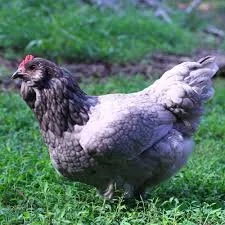
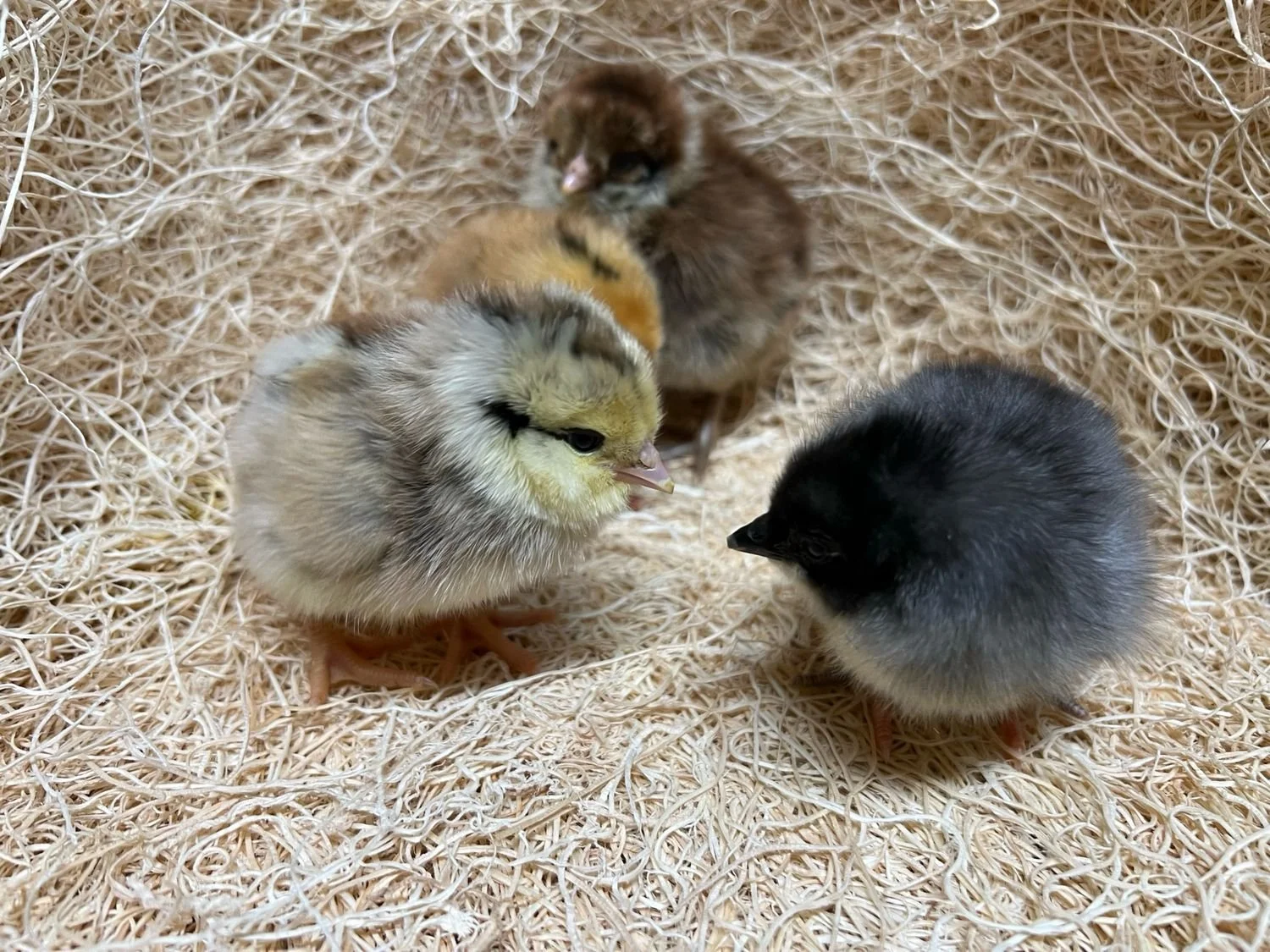
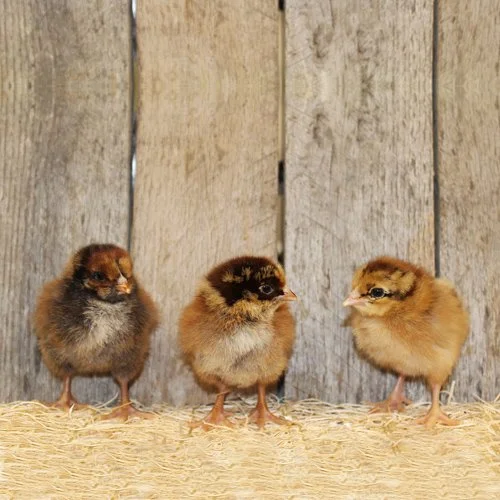
The Arctic Blue Egg Layer has a great disposition and can free range quite well. The more blue hens in color tend to have more Blue Andalusian in their genetic makeup and will tend to lay brighter blue eggs. They tolerate cold and heat very well, which leads to their popularity. They lay between 180 and 200 eggs a year. They will occasionally go broody, more likely in their second year of life. They make excellent mothers when they hatch out chicks. They lay a sky blue egg; however, not all Arctic Blue Eggers will lay the bright blue egg. Some will lay lighter shades of blue.
Olive Egger
Chicks • Pullets • Hens • Roosters
Egg Color: Olive Green
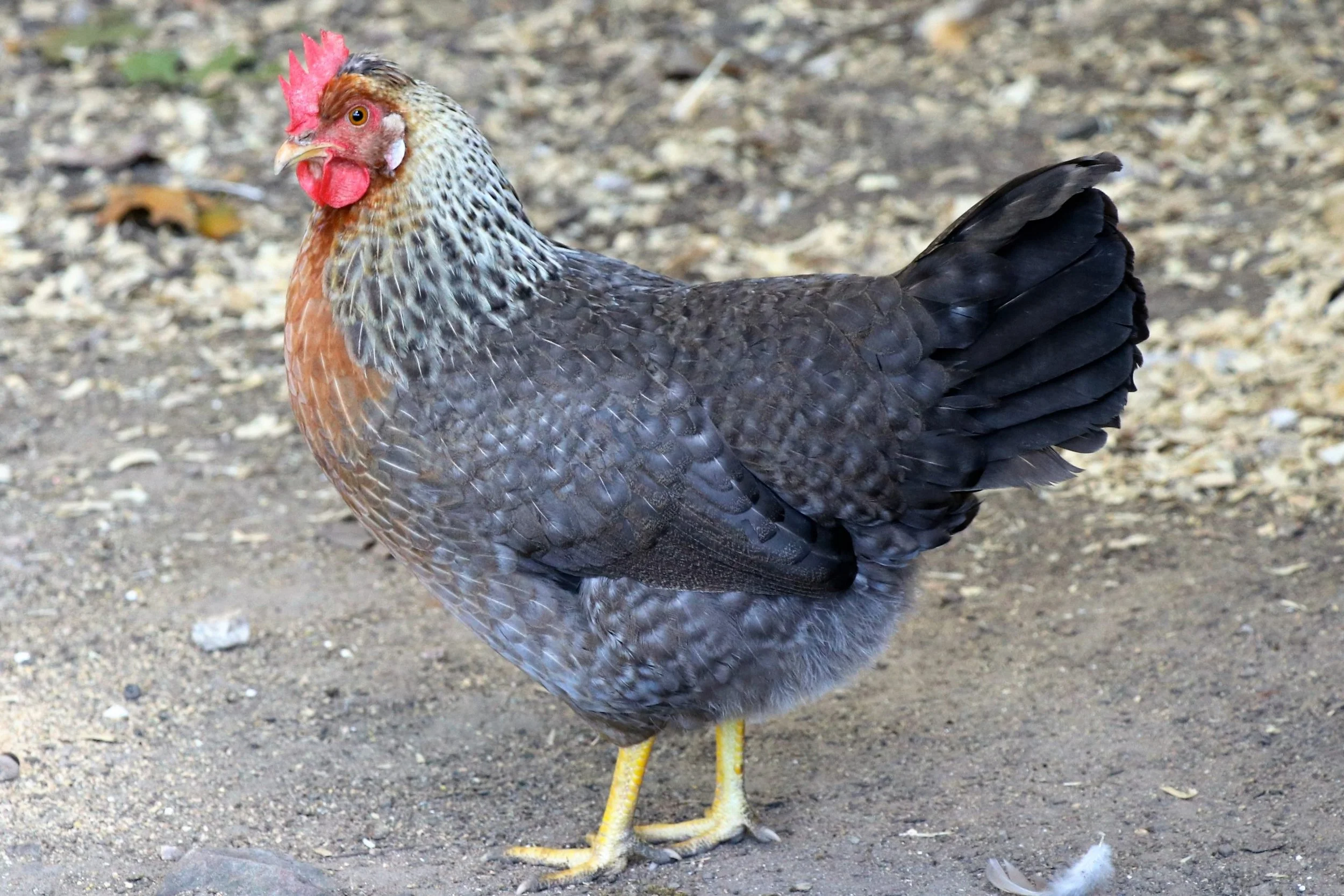
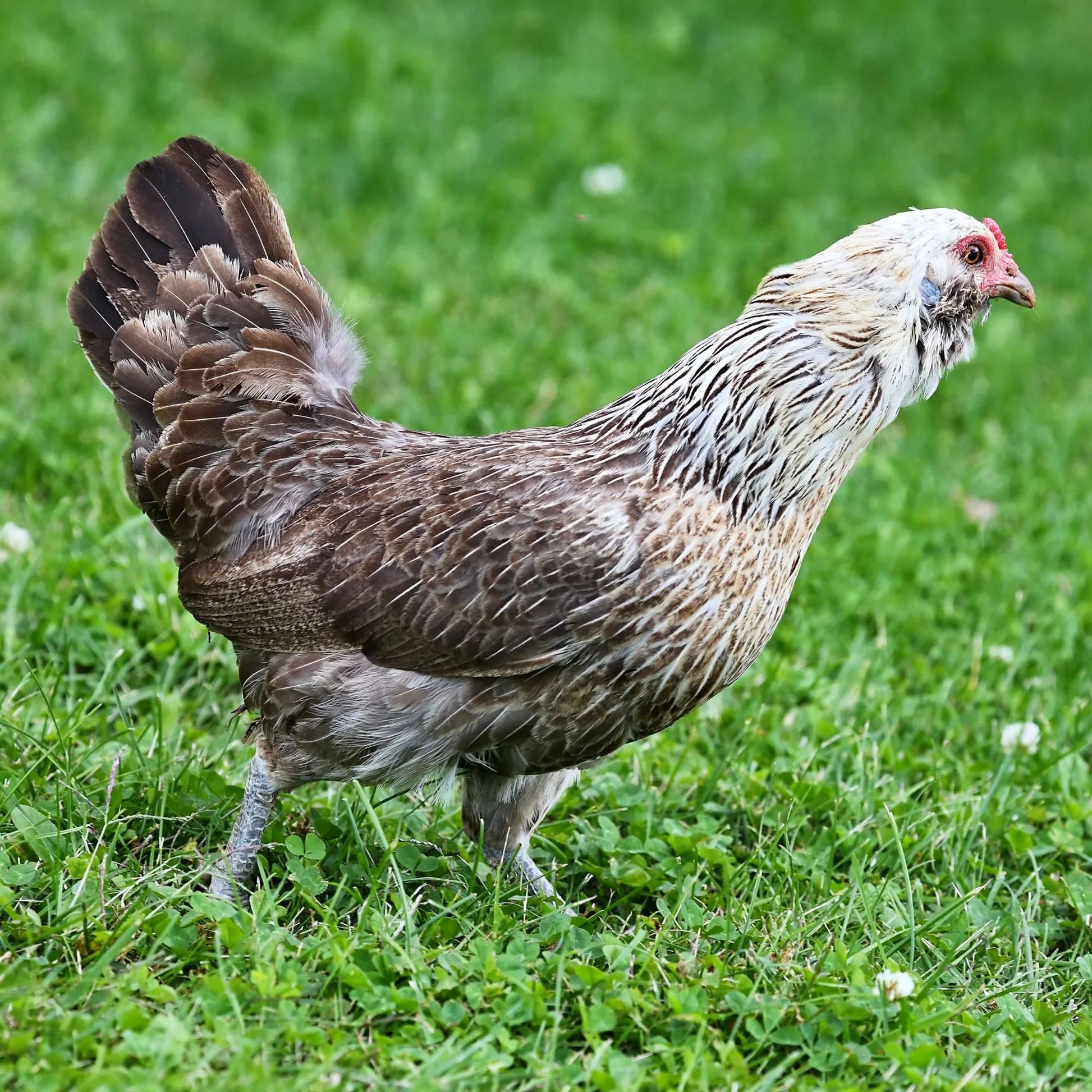
Ideal Olive Eggers will be crossed between Easter Eggers and either a Barnevelder or a Welsummer. This will create a multi-colored pattern similar to Easter Eggers with beards and muffs. They are excellent layers of olive-colored eggs with the occasional bird laying a brown eggs.
Easter Egger
Chicks • Pullets • Hens • Roosters
Egg Color: Blue and Green
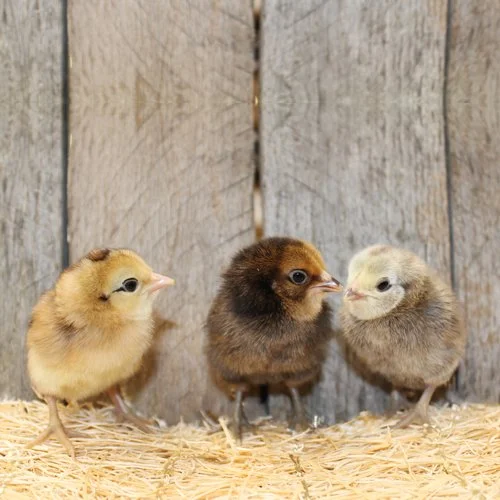
Easter Eggers are multicolored with pea combs, beards, muffs and clean, light black or gray legs and feet. They lay bluish green eggs with the occasional bird laying brown eggs
Blue Olive Egger
Chicks • Pullets • Hens • Roosters
Egg Color: Olive
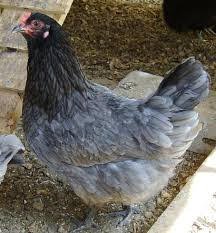
Are you looking for a Blue chicken that also will add some color to your egg basket? Look no further than our Blue Olive Eggers, these olive laying beauties will lay an average of 200 eggs a year, will have blue plumage and some will have a small crest. Add our Blue Olive Eggers to your backyard flock today to add not only beauty in your backyard but also to your egg basket
Blue Cuckoo Marans
Chicks • Pullets • Hens • Roosters
Egg Color: Dark brown, Rich chocolate
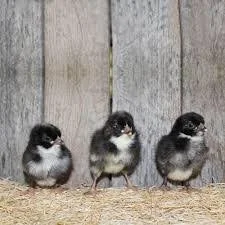
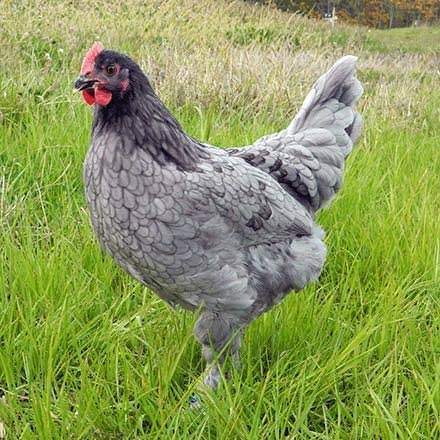
Blue Cuckoo is a fun twist on the ever-loved Marans breed. They exhibit all your typical Marans characteristics, a broad, V-shaped body, tall statures, good foraging, and dark brown eggs. But they always showcase featureful bluish-gray feathers with irregular white stripes on them, known as such. Blue Cuckoo Marans will be a mix of clean and feather-legged chicks. They are renowned for being docile and somewhat shy but friendly. Besides, they are cold-tolerant, meaning they can effortlessly handle cold winter days and nights. They are decent foragers, and like most fowls, this chicken gets along well with other breeds, making it a suitable addition to your flock. Whether on the range or in confinement, these birds thrive in all settings without significant issues.
Cuckoo Marans
Chicks • Pullets • Hens • Roosters
Egg Color: Chocolate Brown
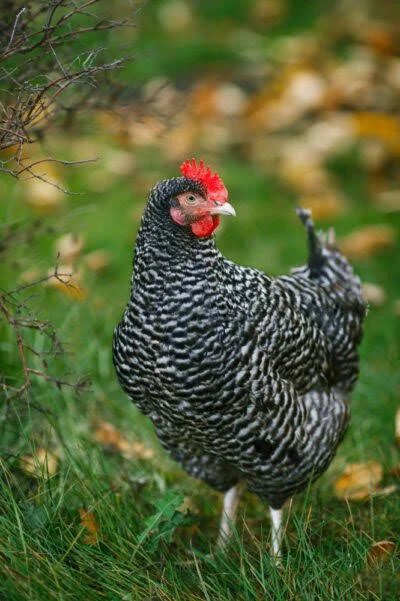
Cuckoo Marans were developed in France as a dual-purpose breed in the early 1900's from de Malines, French Cuckoo or Rennes, Langshans, Faverolles and Barred Plymouth Rocks. Cuckoo Maran chicks are primarily black with a white spot on the top of the head. The front of the neck, wing tips and abdomen are white. They have single combs and clean, black and white feet and legs. All the plumage of adult Cuckoo Marans is cuckoo pattern with each feather marked across with black and white bands. Because of the action of the barred gene, the male plumage is slightly lighter than the female. Female Marans lay extremely dark brown or rich chocolate colored eggs.
Gold Laced Polish
(straight run/unsexed)
Chicks • Pullets • Hens • Roosters
Egg Color: White
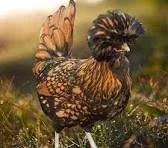
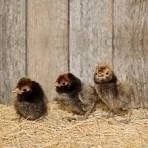
Polish chickens are a long-established breed with record dating back to the 16th century. They were originally known as Paduan or Patavinian fowls and are known as Polish Large Fowls in the British Poultry Standard. Polish chicks are known for having feathers that grow from a knob in the skull of their head, giving them a recognizable crest. Golden Laced Polish chicks are black and brown with a crest. If a comb is present, it is of the V-type, and they have clean, blue or slaty blue legs and feet. Adult plumage is primarily golden bay laced with black. Their crests should be black laced with golden bay that changes to golden bay laced with black after the first molt.
Silver Laced Polish
(straight run/unsexed)
Chicks • Pullets • Hens • Roosters
Egg Color: White
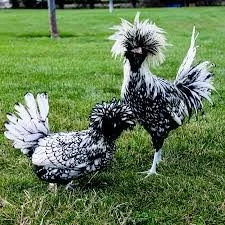
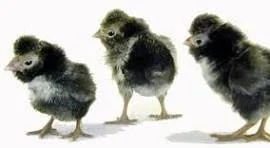
The Silver Polish is a v-shaped comb, clean legged variety that originated in Holland. Certainly the most notable of the ornamental breeds, accentuated by their beautiful crown or "crest" they are truly outstanding. They may not be as hardy as other breeds due to when they drink water in the winter, ice may build on their crest. Some may be bearded and others non-bearded.
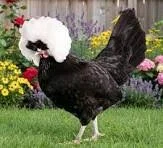
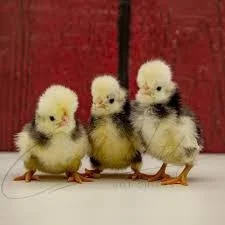
White Crested Black Polish
(straight run/unsexed)
Chicks • Pullets • Hens • Roosters
Egg Color: White
Cuckoo Marans were developed in France as a dual-purpose breed in the early 1900's from de Malines, French Cuckoo or Rennes, Langshans, Faverolles and Barred Plymouth Rocks. Cuckoo Maran chicks are primarily black with a white spot on the top of the head. The front of the neck, wing tips and abdomen are white. They have single combs and clean, black and white feet and legs. All the plumage of adult Cuckoo Marans is cuckoo pattern with each feather marked across with black and white bands. Because of the action of the barred gene, the male plumage is slightly lighter than the female. Female Marans lay extremely dark brown or rich chocolate colored eggs.
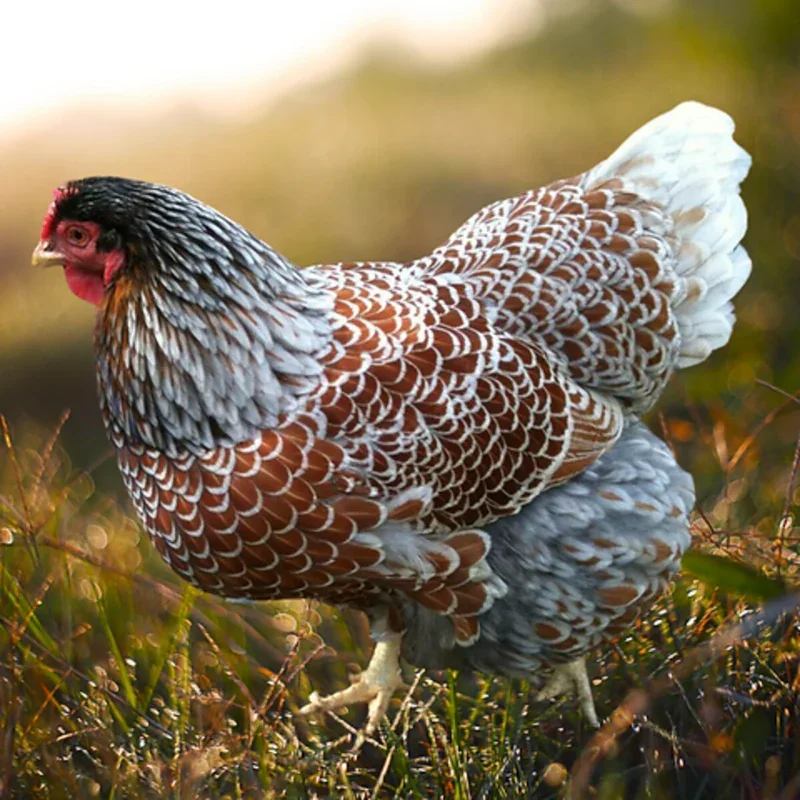
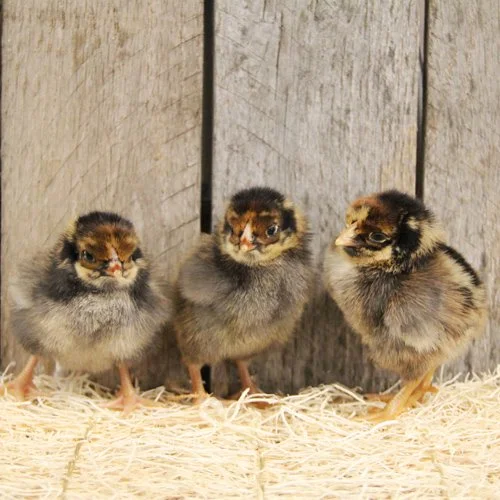
Blue Laced Red Wyandotte
Chicks • Pullets • Hens • Roosters
Egg Color: Brown
The true origin of the Wyandotte is unknown, however, Dark Brahmas and Spangled Hamburgs were probably used in the development of the original Silver Laced variety. Blue Laced Red Wyandotte chicks are primarily brown, with some light blue to black on their backs and heads. They have a rose comb with yellow and brown, clean legs and feet. Adults have a primarily red plumage with blue lacing around the edges of each feather.
Gold Laced Wyandotte
Chicks • Pullets • Hens • Roosters
Egg Color: Brown
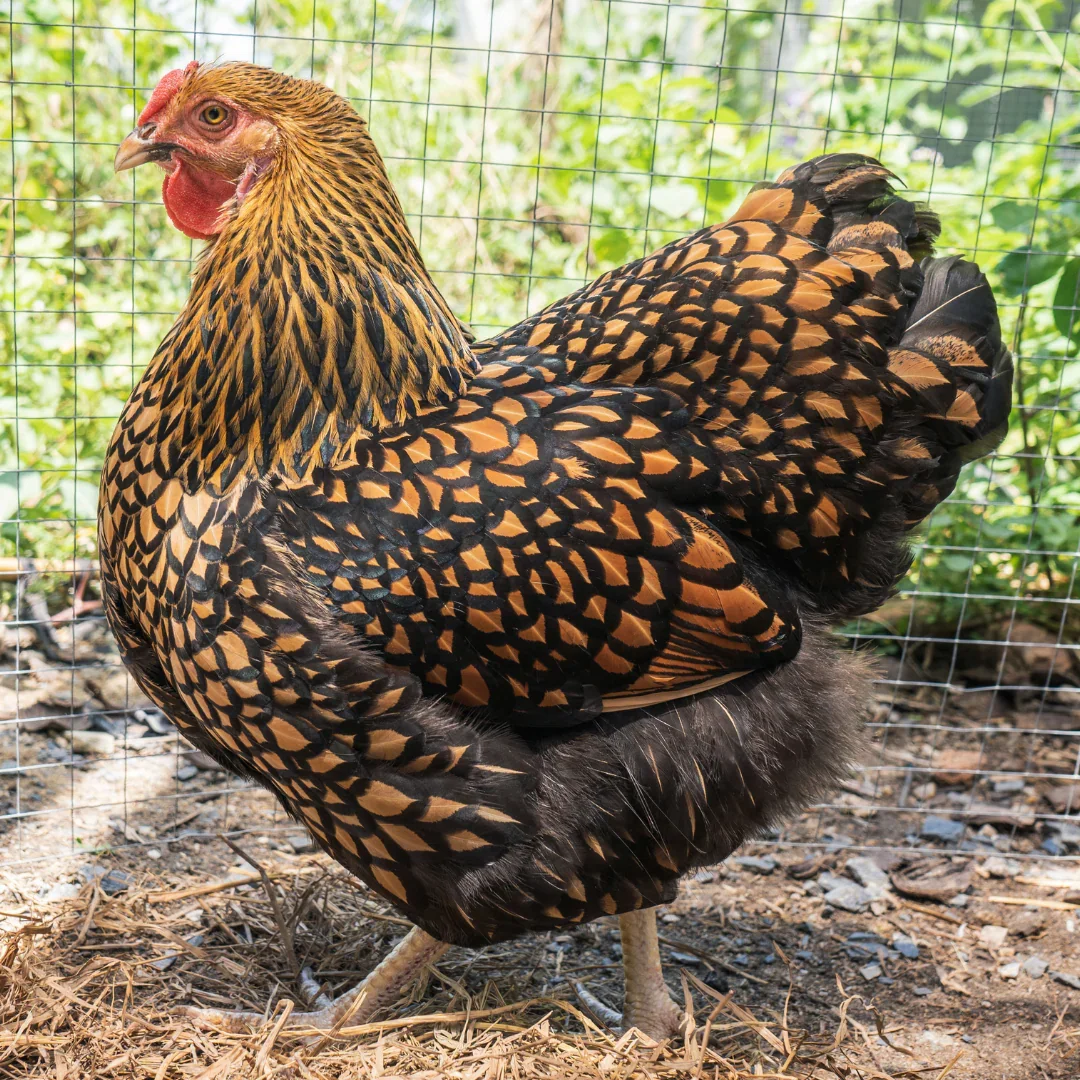
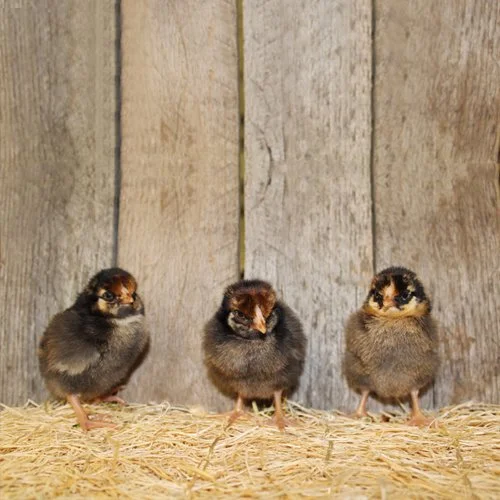
The true origin of the Wyandotte is unknown; however, Dark Brahmas and Spangled Hamburgs were probably used in the development of the original Silver Laced variety. The Golden Laced Wyandotte was developed in 1880 when a Silver Laced Wyandotte female was crossed with a crossbred Partridge Cochin and Brown Leghorn male. Golden Laced Wyandotte chicks are brown and black, with brown streaks running down their back. Some have a light chest, abdomen and wingtips. They have a rose comb with yellow and brown markings, clean legs, and feet. Adult males have a gold head with each feather having a black stripe. The neck is greenish-black with narrow gold lacing; the back is golden, and the tail is black. The breast feathers are gold with greenish black lacing. Adult females have the same gold feathers with greenish-black lacing on their body, back, breast, and lower thighs. The female head is gold, and the tail is black.
Silver Laced Wyandotte
Chicks • Pullets • Hens • Roosters
Egg Color: Brown
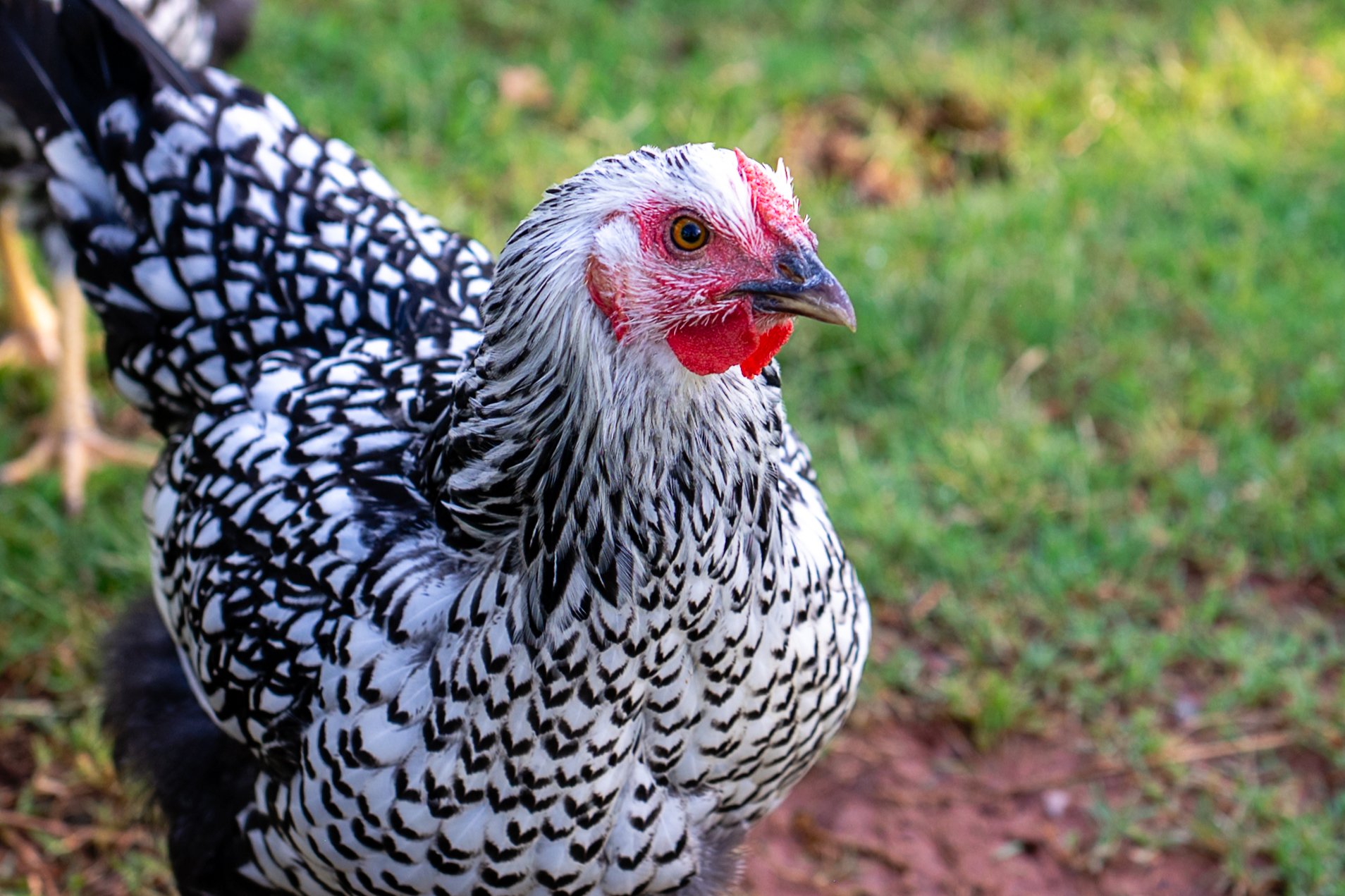
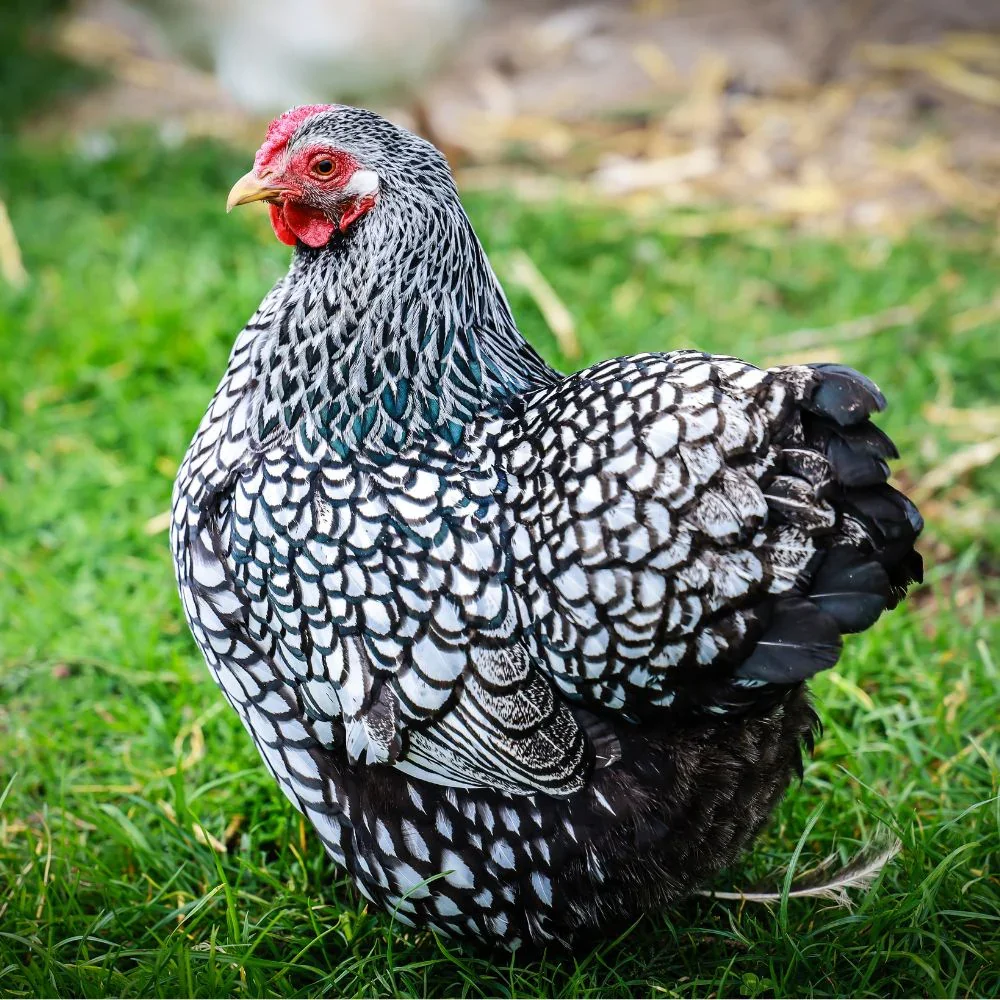
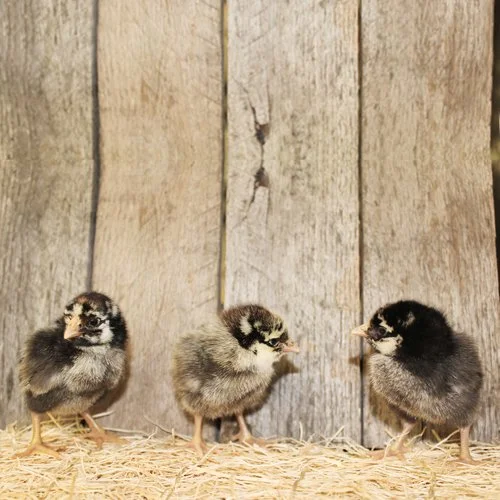
The true origin of the Wyandotte is unknown, however, Dark Brahmas and Spangled Hamburgs were probably used in the development of the original Silver Laced variety. Silver Laced Wyandottes are black with white streaks down the back. The chest and abdomen may be either gray or white, and the wing tips are white. They have a rose comb with yellow and gray, clean legs and feet. Adult males have a white head with each feather having a black stripe. The neck is greenish black with narrow white lacing, the back is white, and the tail is black. The breast feathers are white with greenish black lacing. Adult females have the same white feathers with greenish black lacing on their body, back, breast and lower thighs. The female head is white, and the tail is black.
Colombian Wyandotte
Chicks • Pullets • Hens • Roosters
Egg Color: Brown
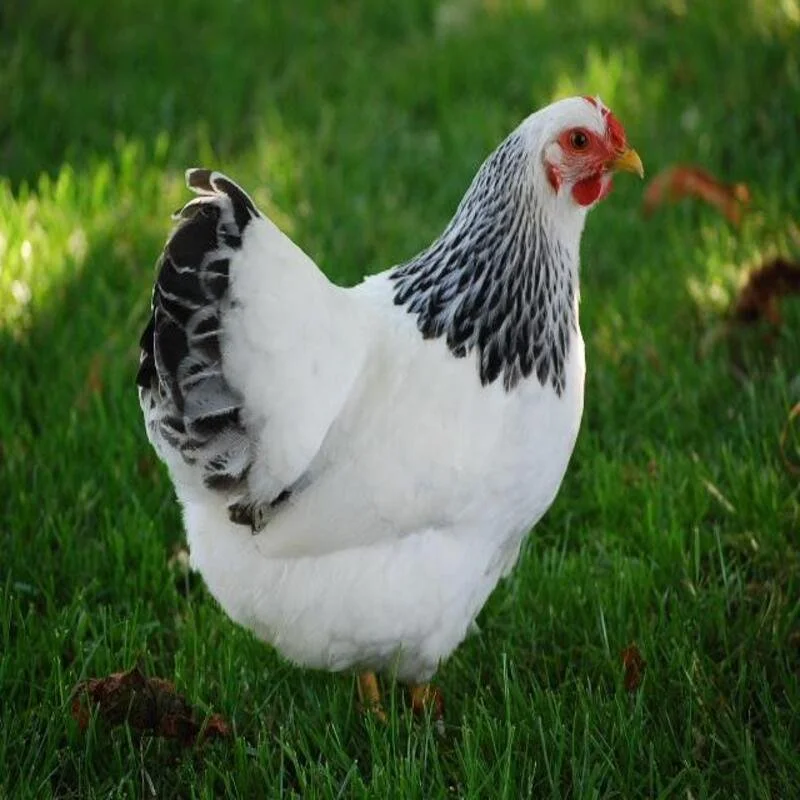
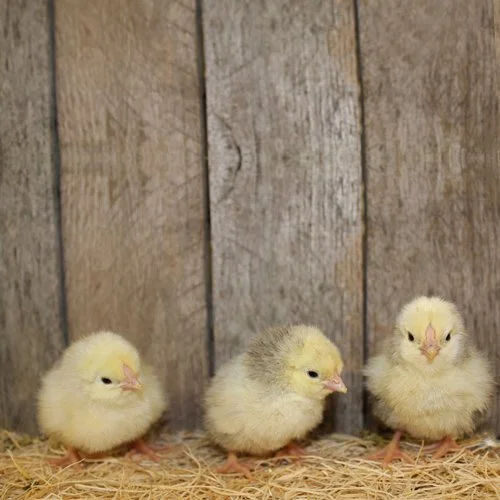
The true origin of the Wyandotte is unknown, however, Dark Brahmas and Spangled Hamburgs were probably used in the development of the original Silver Laced variety. Columbian Wyandottes were developed from a cross of White Wyandottes and Barred Plymouth Rocks. Columbian Wyandotte chicks have gray backs with light yellow heads, wing tips and chests. They have rose combs and clean, yellow legs and feet. Adult males and females have a similar plumage that is primarily white with black markings. The wing primaries are black or black edges while the secondaries have a black inner web and white outer web. The tail is green black except the top two feathers that may be laced with white, and the coverts may or may not be laced with white.
Speckled Sussex
Chicks • Pullets • Hens • Roosters
Egg Color: Brown
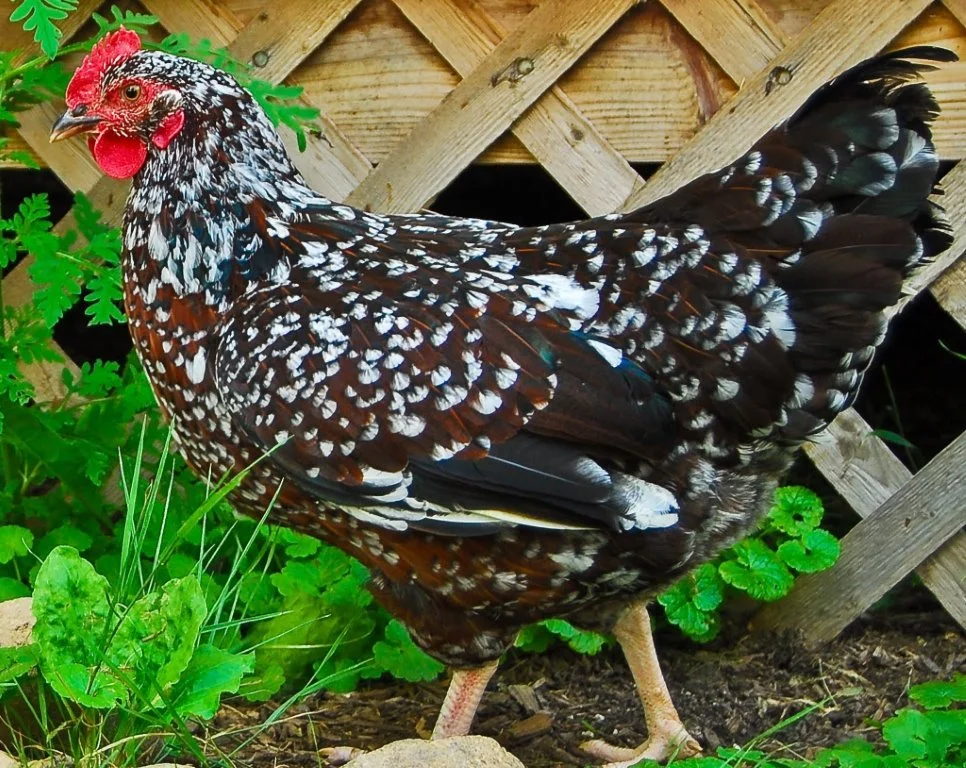
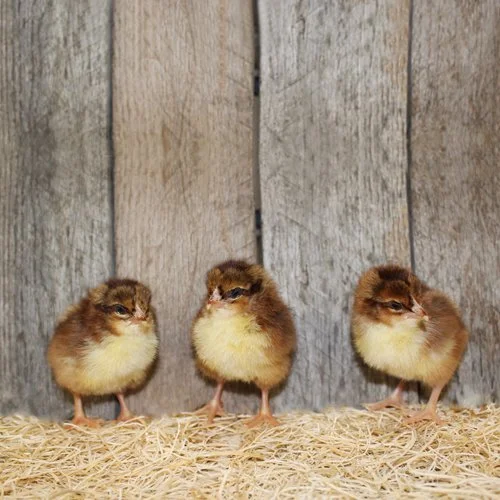
The Sussex breed originated in Sussex County, England to be used for table poultry. Speckled Sussex chicks are dark brown with two light brown streaks down the back. They have white wing tips, chests and abdomens. They have single combs and clean, white legs and feet. Adult females have mahogany bay plumage on their head, neck, back, breast, body, lower thigh and tail coverts and each feather is tipped with a small white spangle. The main tail is black mottled with brown and tipped with a white spangle and the wing primaries are black and white. Adult males have similar plumage to the female except that the plumage of the head, neck and back is more lustrous, and the sickles and coverts of the tail are greenish black tipped with white.
Blue Copper Maran
Chicks • Pullets • Hens • Roosters
Egg Color: Dark Brown
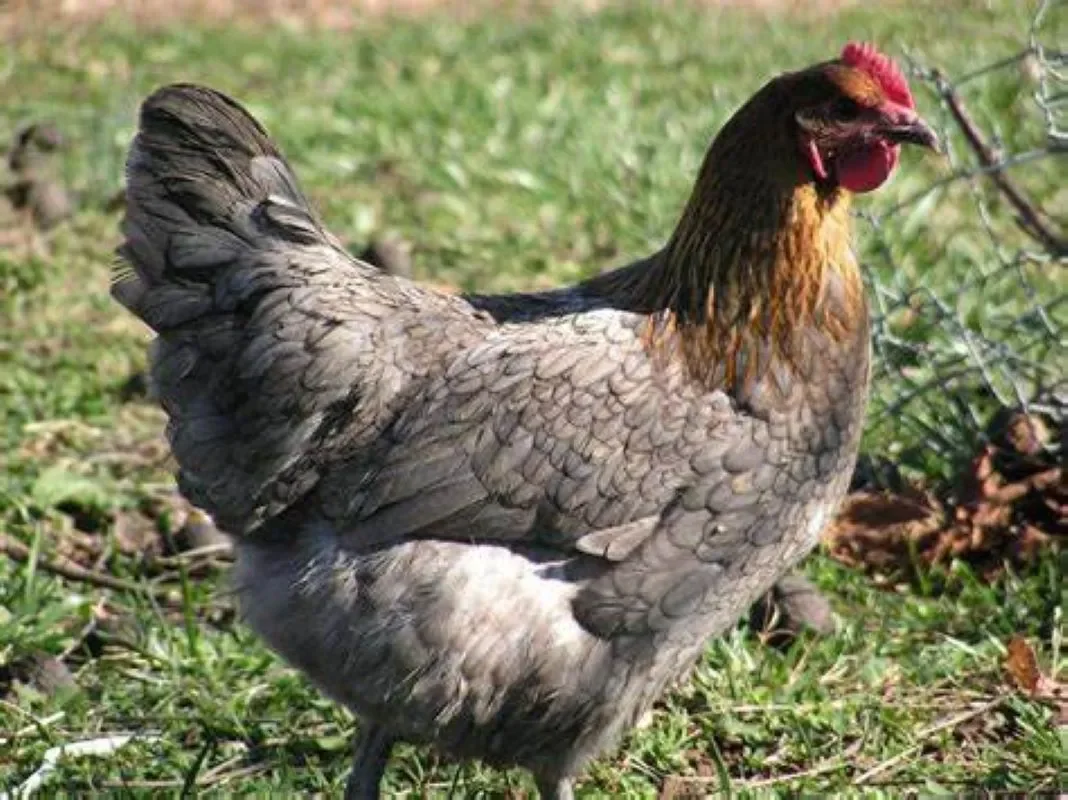
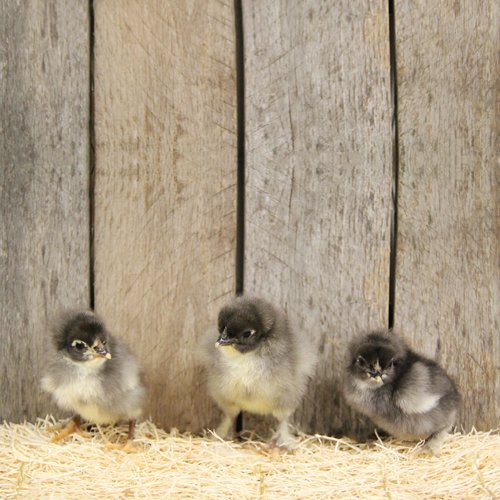
Blue Copper Marans are primarily known for their large dark chocolate brown eggs. Blue Copper Marans eggs are the darkest of all the Marans varieties. As with all dark brown egg layers, the eggs are the darkest at the beginning of the laying cycle. The eggs will lighten slightly then return to darkest color after a period of time. Blue Copper Marans do well on free range, causing less damage through heavy scratching. These feathered legged birds are fast growers and are a good dual-purpose breed for the homestead or backyard flock.
Sapphire Gem (Blue Star)
Chicks • Pullets • Hens • Roosters
Egg Color: Brown
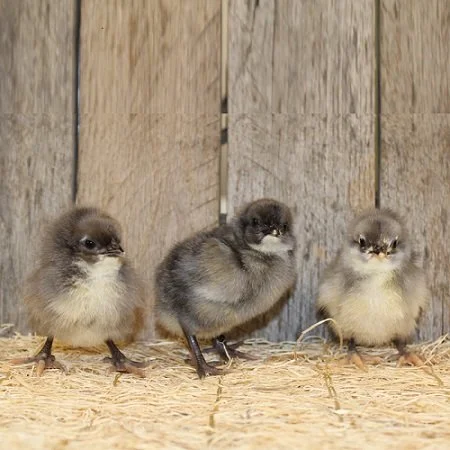
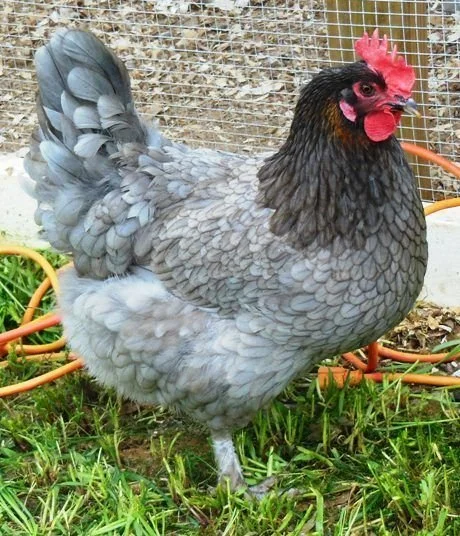
Blue Stars are a cross between a Blue Andalusian and a Barred Rock. Chicks will be blue, gray or splash. Their size, temperament and production will mimic that of a Barred Rock.
Golden Star
Chicks • Pullets • Hens • Roosters
Egg Color: Brown
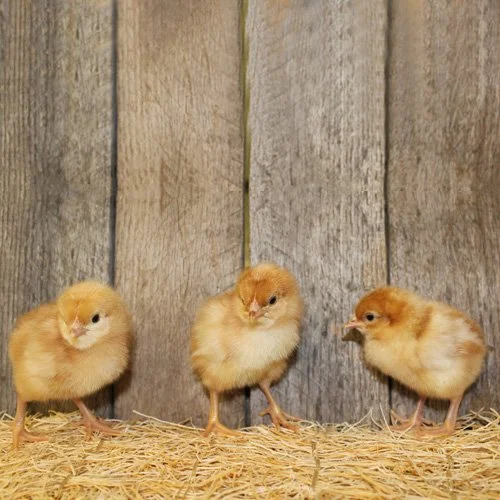
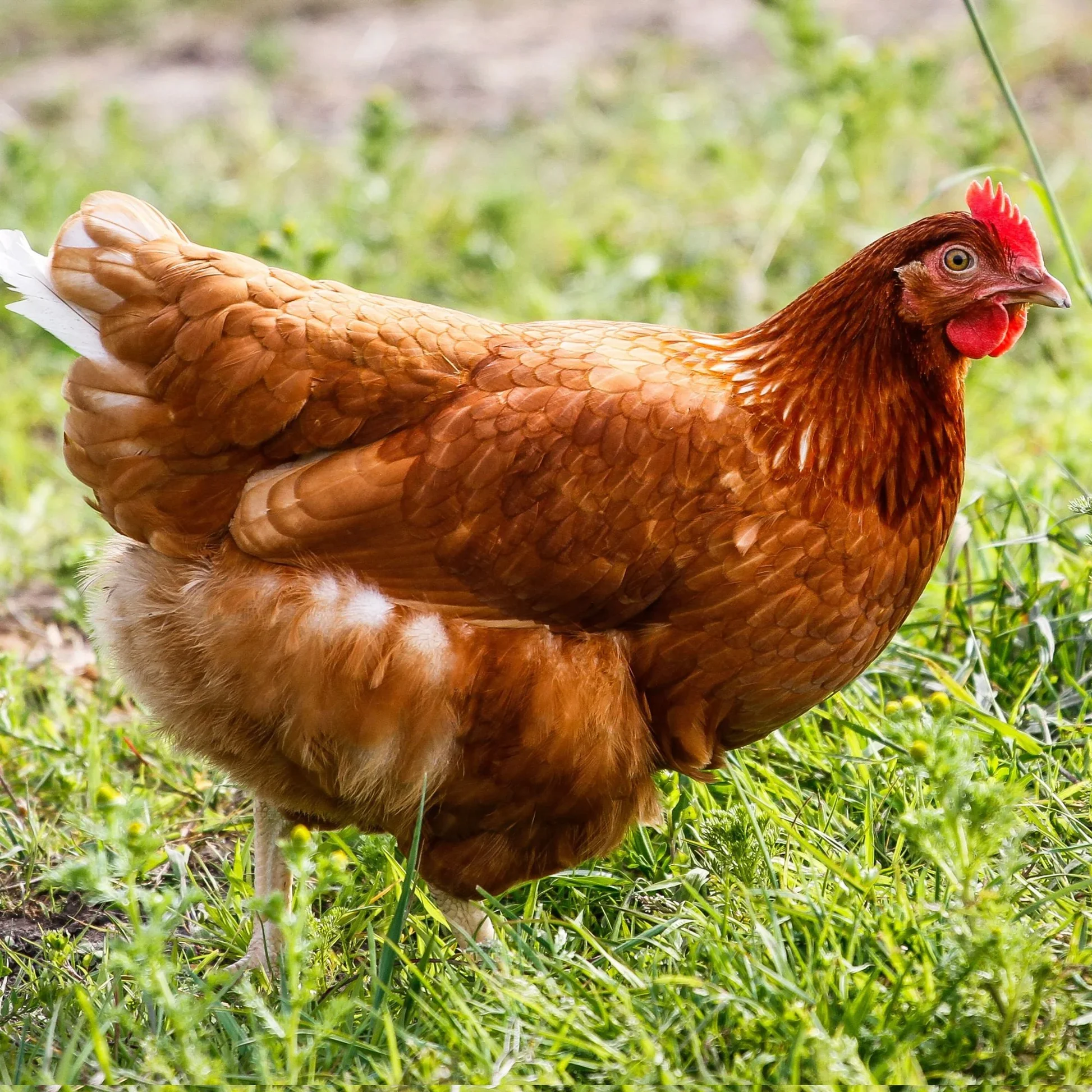
Gold Stars were developed in the 1950’s by crossing a Rhode Island Red male with a Rhode Island White female for efficient brown egg production and ease of sexing. Male Gold Stars chicks are light yellow without any red, while the females have varying amount of red down. This slight difference in down color allows the hatchery to easily sex these chicks at day of hatch. Adult males are solid white and have a body type similar to a Rhode Island Red. Adult female have a very light red body appearance with white tails, wing tips, hackles and body undercover.
Lavender Orpington
Chicks • Pullets • Hens • Roosters
Egg Color: Brown
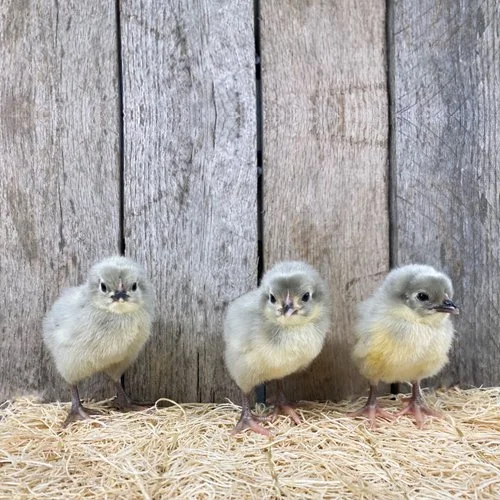
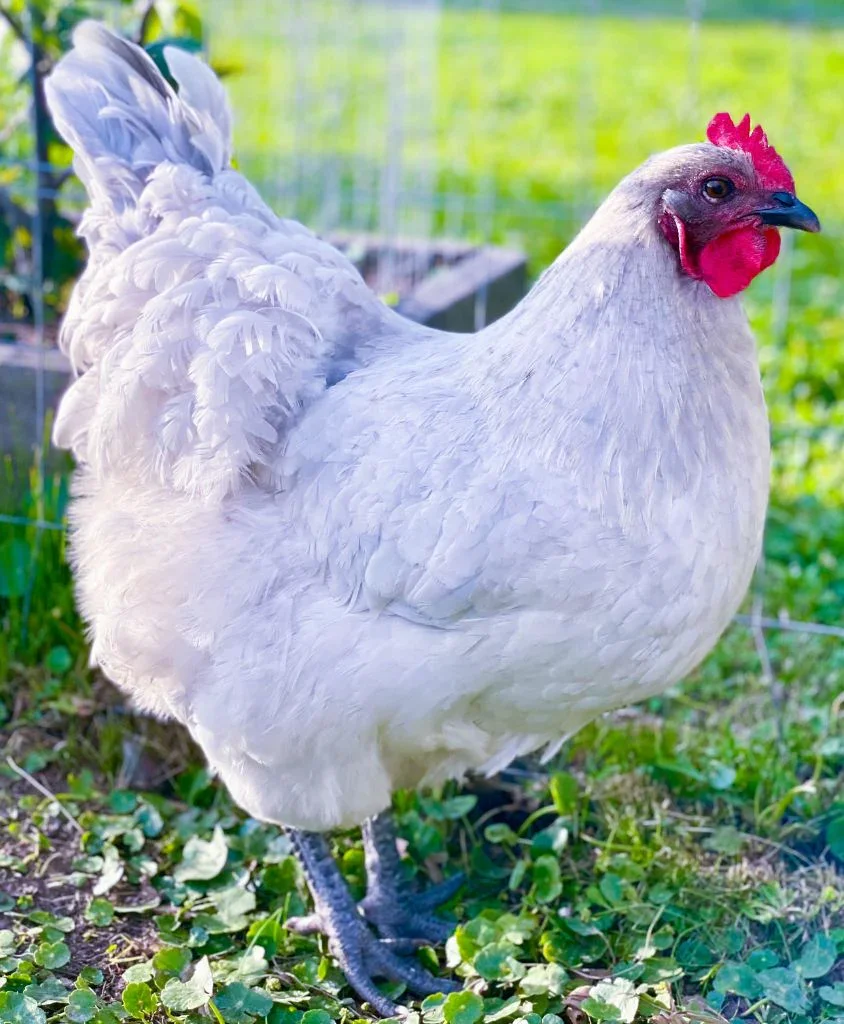
Lavender Orpingtons are a large breed chicken with an upright stance and medium-sized single comb. They are cold-hardy and have a full and fluffy lavender plumage. This breed will lay medium to large-sized light brown eggs. Their uniqueness accompanied with their docile nature make them a great option for backyard flocks.
Buff Orpington
Chicks • Pullets • Hens • Roosters
Egg Color: Brown
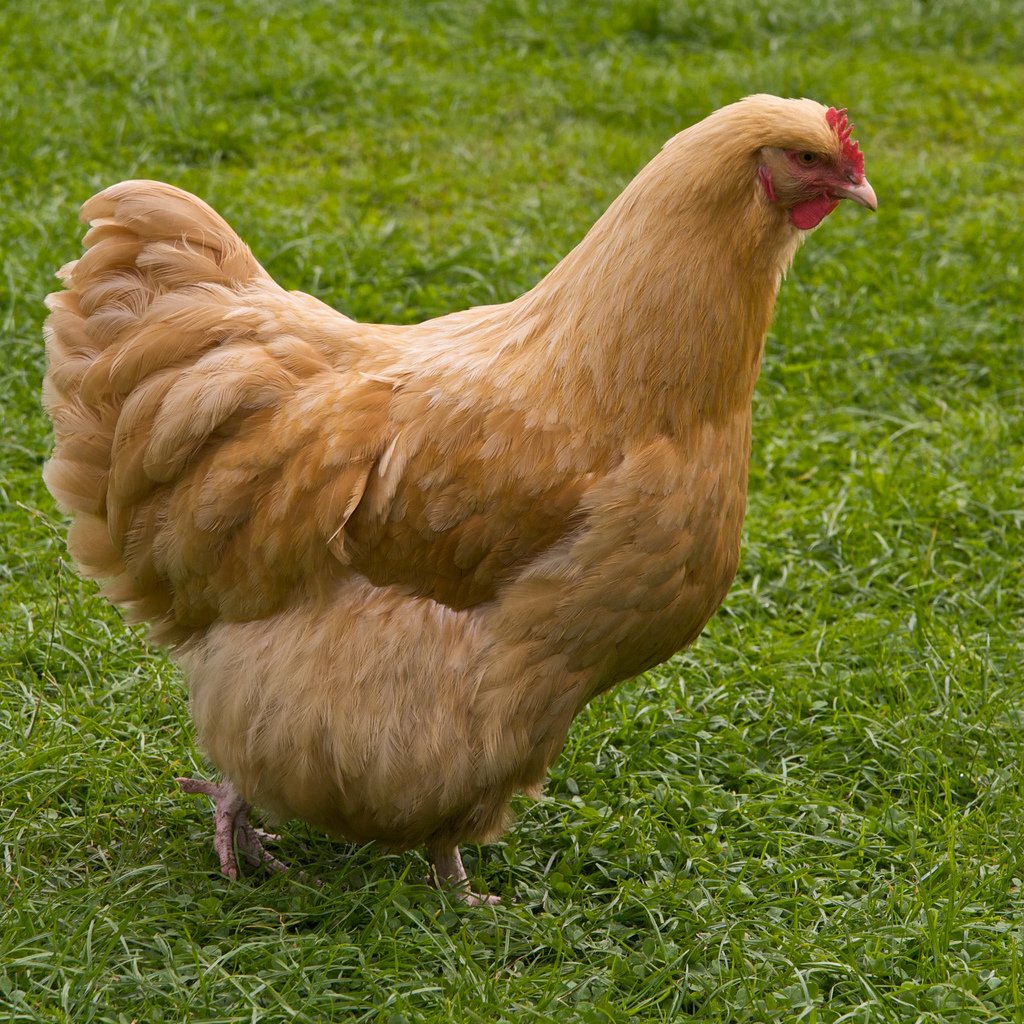
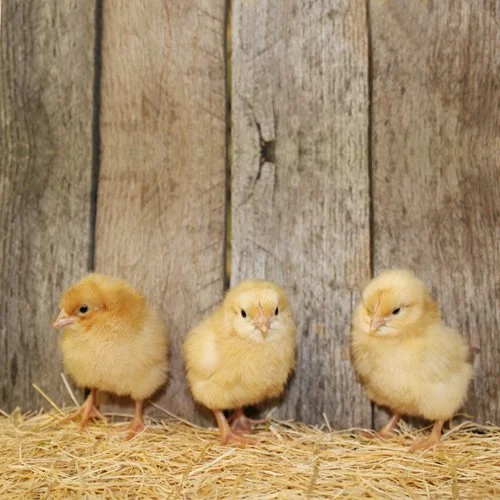
The first Orpingtons were black and originated in the town of Orpington in County Kent from Black Langshans, Black Minorcas and Black Plymouth Rocks with Cochin blood being introduced later. Today, Buff Orpingtons are the most popular variety of Orpingtons, used primarily for production of brown eggs. Buff Orpington chicks are light buff or straw colored throughout. They have single combs and clean, white legs and feet. Adults have golden buff plumage and pinkish white beaks, shanks and toes. They are a heavy, but loosely feathered, appearing to be much heavier than their true weight.
Black Australorp
Chicks • Pullets • Hens • Roosters
Egg Color: Brown
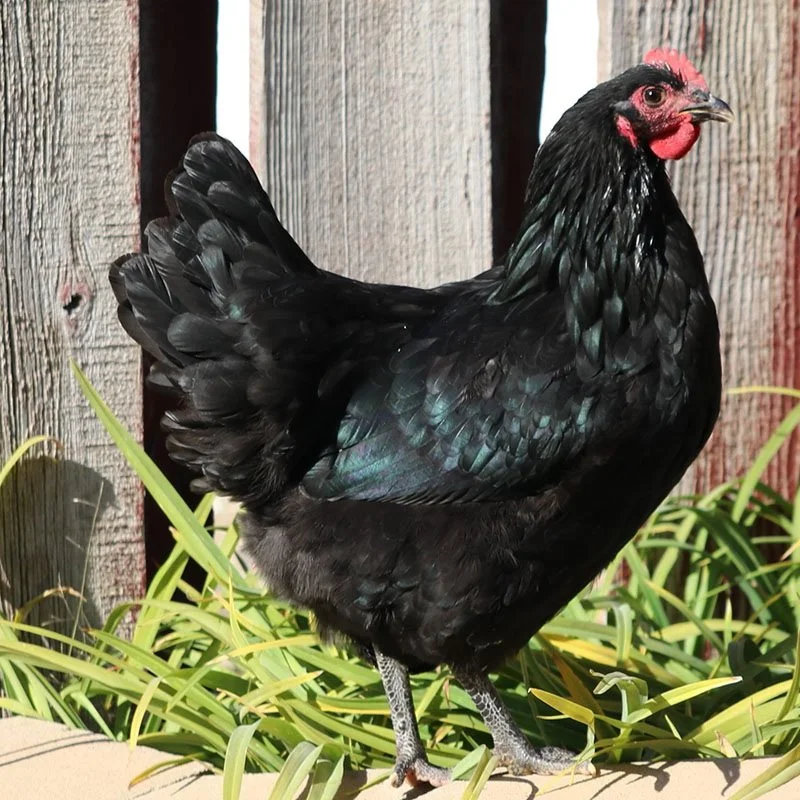
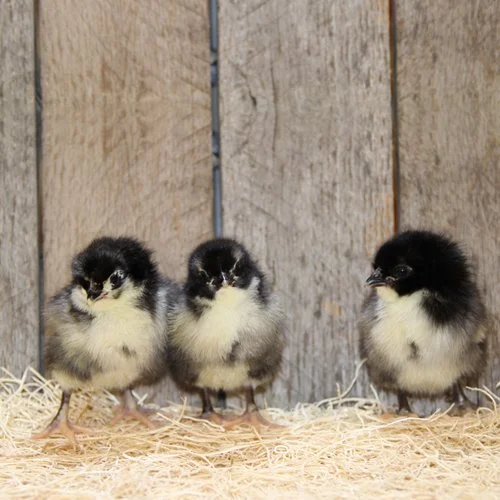
Australorp is an abbreviation of the name Australian Black Orpington. They were developed in Australia from Black Orpingtons with an emphasis on egg production. Black Australorp chicks are primarily black with white wing tips, chest and abdomen. They have single combs and clean, white and black legs and feet. Adults have solid black plumage with a notable green sheen that is more pronounced in the sunlight. Like most black varieties, they may have some white in the wing tips before they reach maturity.
Blue Australorp
Chicks • Pullets • Hens • Roosters
Egg Color: Brown
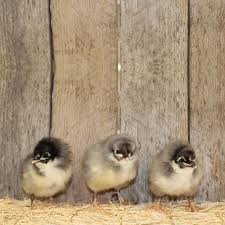
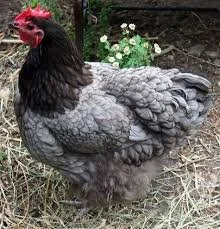
Blue Australorps were developed in Australia with an emphasis on egg production. Blue Australorp chicks are primarily blue with white wing tips, chest and abdomen. They have single combs and clean, white and black legs and feet. Adults have blue plumage. Like most blue varieties, plumage may vary from slate to deep blue.
Rhode Island Red
Chicks • Pullets • Hens • Roosters
Egg Color: Brown
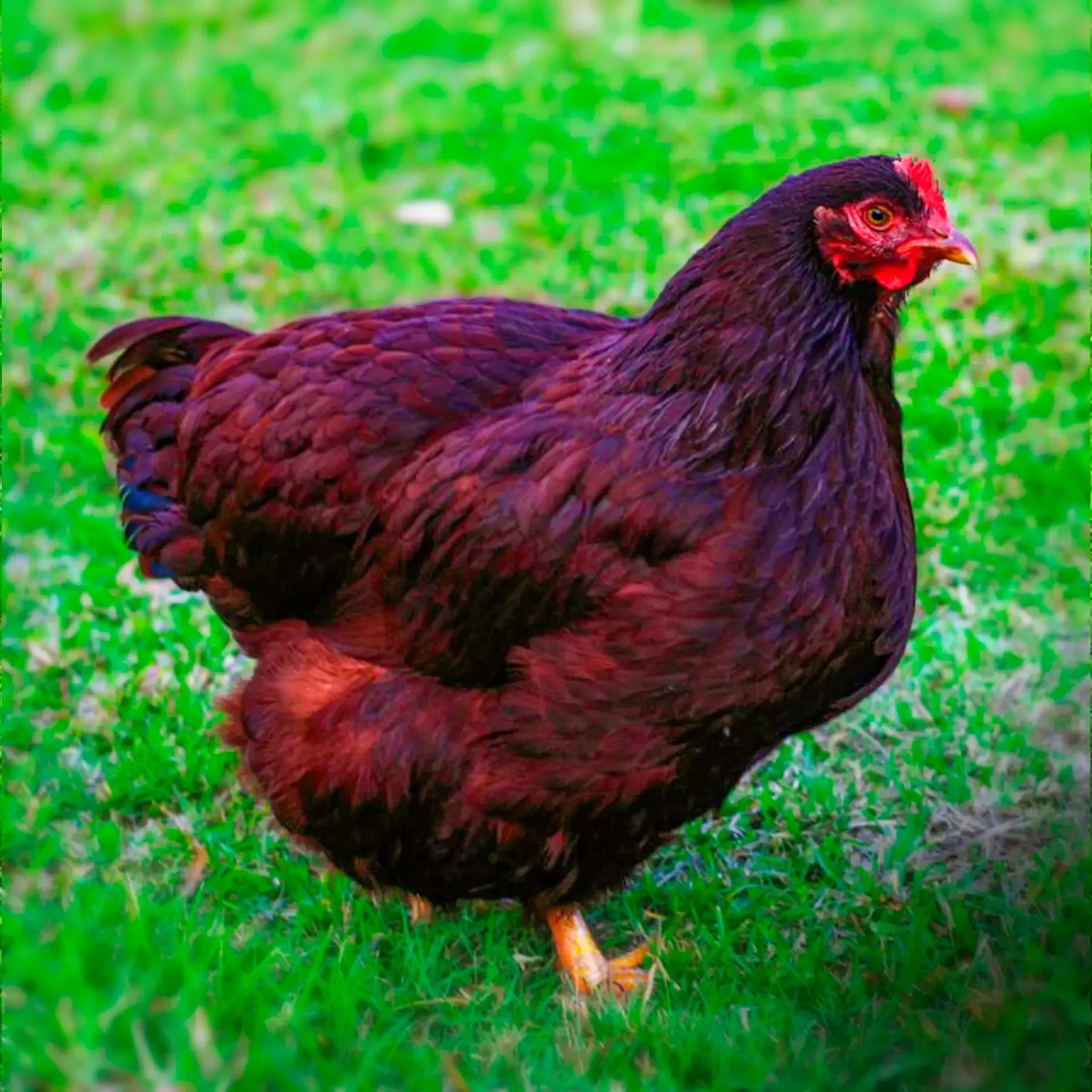
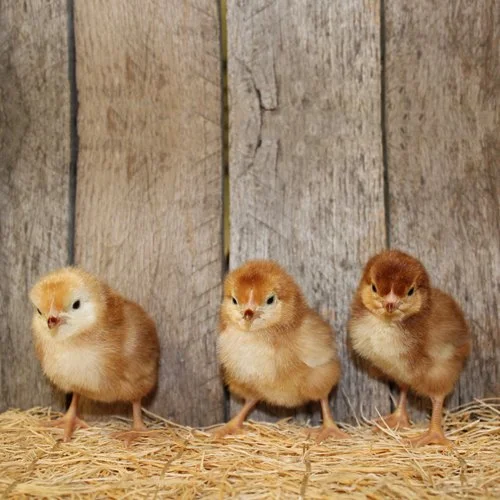
Rhode Island Reds were developed in the 1860’s in Rhode Island from Red Malays, Brown Leghorns and Asiatic stock. They were originally known as Red Javas but were shown as Rhode Island Reds in 1898 and were admitted to the Standard of Perfection under the same name in 1904. Rhode Island Red chicks are dark red with some having darker streaks down the back. The wing tips, chest and abdomen are lighter with the wing tips appearing white. They have single combs and clean, yellow legs and feet. The adult plumage is dark mahogany red with a black tail. They are considered a dual-purpose breed but are primarily used for brown egg production.
Barred Rock
Chicks • Pullets • Hens • Roosters
Egg Color: Light Brown
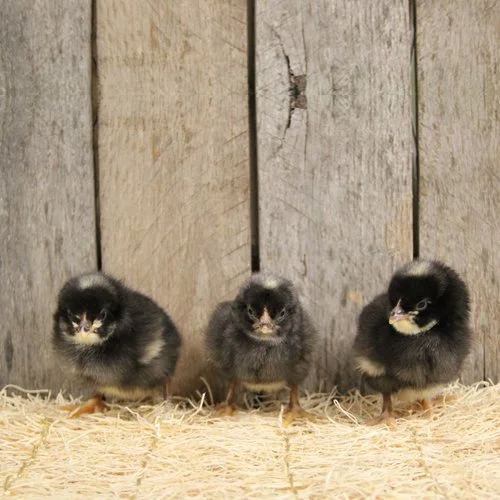
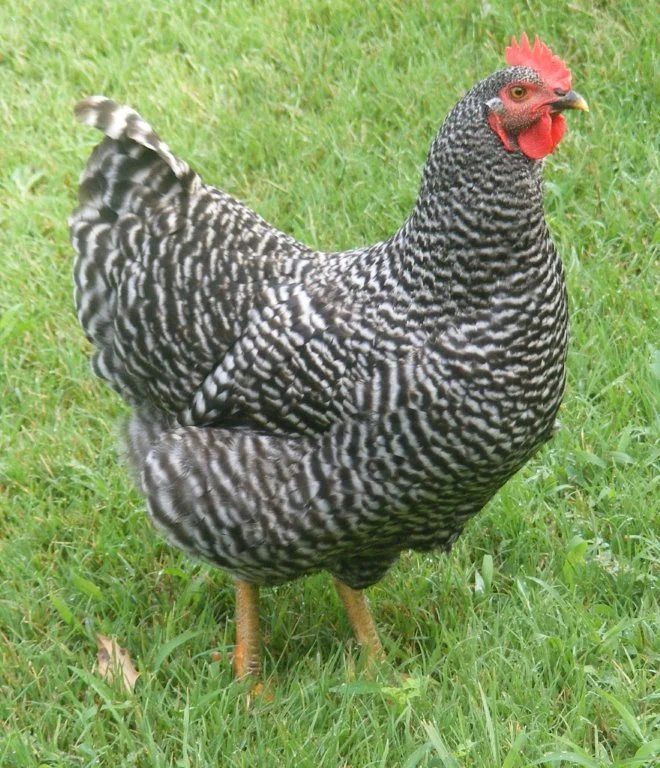
Plymouth Rocks were developed from a cross of Dominique males and either Black Java or Black Cochin females. The original Plymouth Rock had a barred plumage pattern and was considered the most popular breed in the United States in the early 20th Century, used for both meat and brown egg production. Barred Plymouth Rock chicks are black with a white spot on top of the head. The wing tips and abdomen are white. They have single combs and clean, yellow and black legs and feet. All the adult plumage is barred, black and white. Because of the nature of the sex-linked barred gene, the adult females are darker than the males.
White Leghorn (Ideal 236)
Chicks • Pullets • Hens • Roosters
Egg Color: White
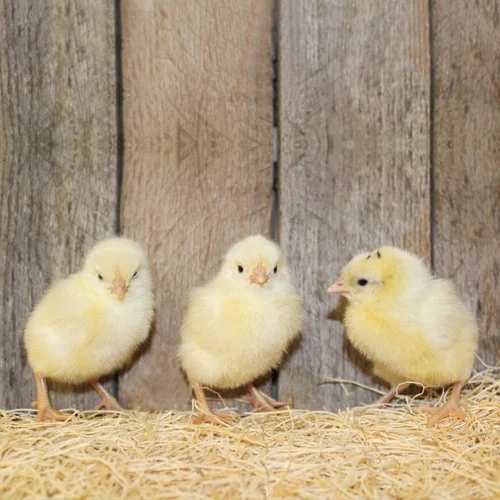
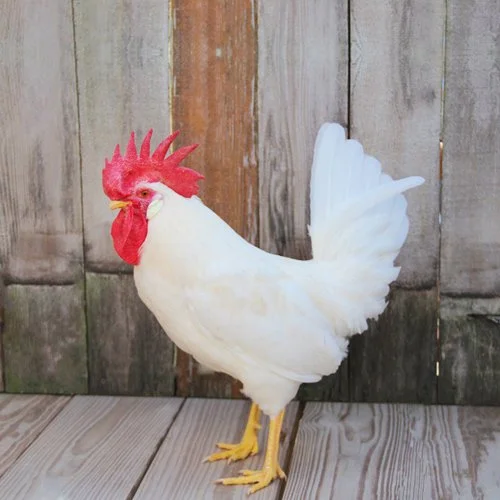
Is it pronounced “Leghorn” or “Leghern”? Either way, these birds are great. This breed was developed simultaneously in England and the U.S. in the 1850s, with ancestry tracing back to birds in Northern Italy. Leghorns are very active birds – scratching and foraging the day away. They are hardy and easy breeders, but are mostly known for their egg production. You could easily get 280 eggs in a year, even up to 300. Many of the white eggs you see in grocery stores are produced by this breed of chicken.
Black Frizzle Bantam
(straight run/unsexed)
Chicks • Pullets • Hens • Roosters
Egg Color: Brown
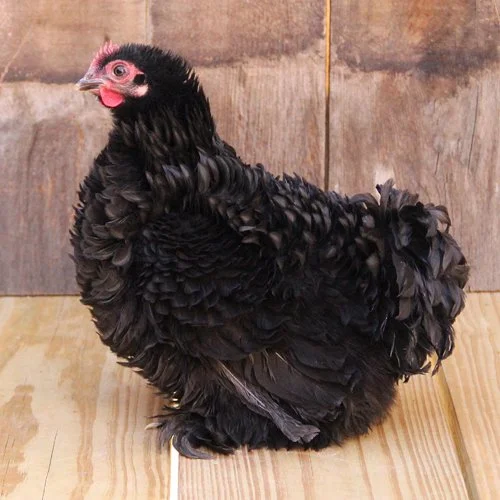
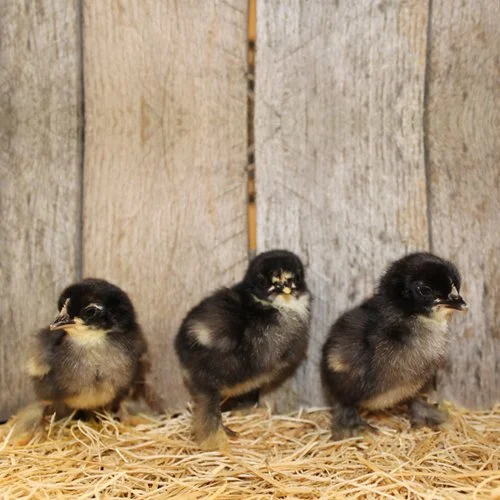
Frizzles are named after the nature of their feathers that curve outward and forward, giving the appearance of having been dried with a blow dryer. Most of the early frizzled fowls were found in southeastern Asia, the East Indies and Africa, with descriptions of frizzled fowls going back to the 1600’s. Black Frizzle Cochin bantam chicks are primarily black with white on the wing tips, chest, abdomen and feet. They have single combs and feathered legs and feet. All the adult plumage is greenish black with each feather having a backward curl. Because the frizzle gene does not breed true, generally one fourth of your chicks will not show the frizzle characteristic. The frizzle characteristic does not show until the chicks begin to mature.
Light Brahma Chicken
Chicks • Pullets • Hens • Roosters
Egg Color: Brown
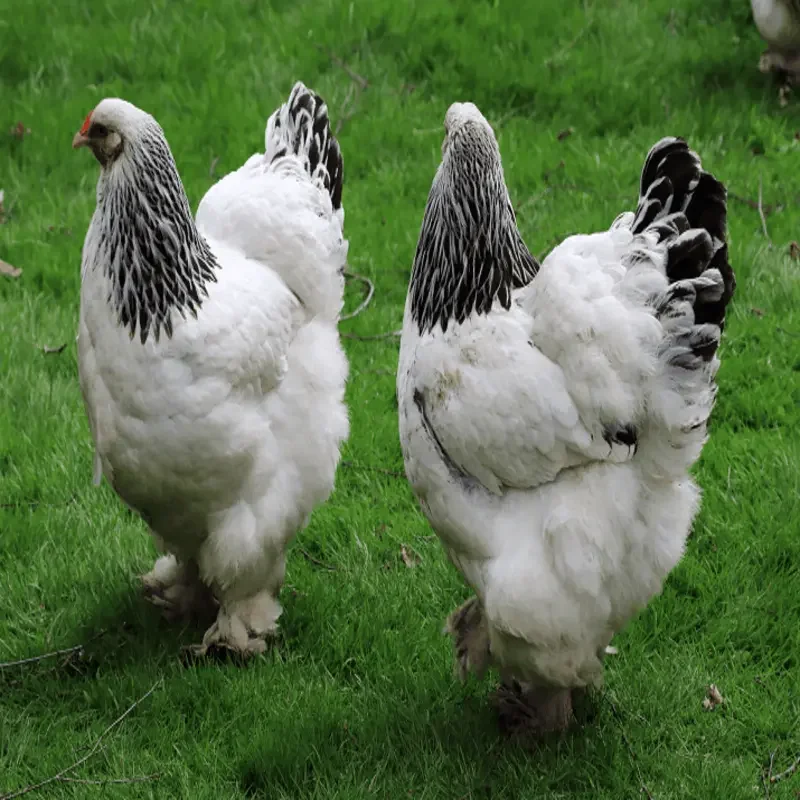
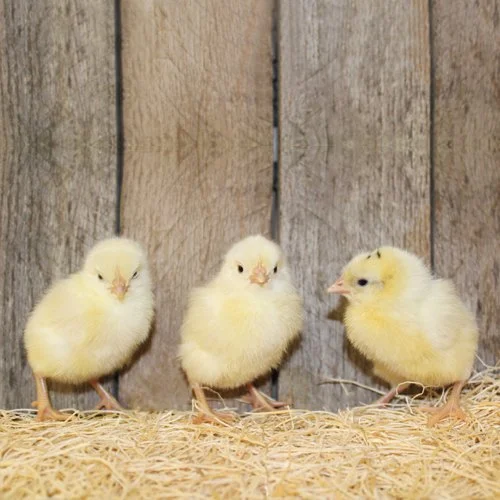
Originating in Asia and introduced to this country in the mid-1800s, Light Brahma chickens are renowned for their quiet, gentle nature and ease of handling. With their small pea combs, impressive size, and dense plumage, these birds are well-suited to cold climates.
They feature feathered legs, are reliable layers of brown eggs, and make excellent brood mothers, making them very child-friendly as pets. Their plumage is primarily white with black tail and neck feathers. Brahmas are notable for their large stature, with roosters reaching up to 12 pounds and hens approaching 10 pounds, making them a good choice for meat production.
These chickens are adaptable to various climates. Their substantial body and thick feathering provide excellent cold tolerance. During summer, they thrive with adequate shade and water. However, their feathered legs and feet can collect mud in rainy conditions and snow in winter, so it's important to monitor and clean their feet as necessary. The Chicken Coop Company offers production-type Light Brahma chickens rather than exhibition types.
Black Silkie Bantam
(straight run/unsexed)
Chicks • Pullets • Hens • Roosters
Egg Color: Tinted
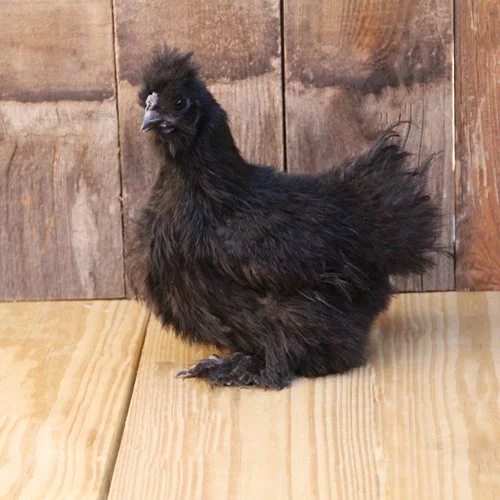
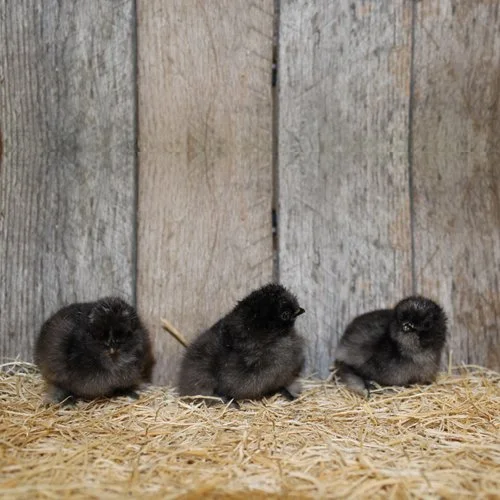
Silkies were described by Marco Polo in the 13th century as “hens which have hair like cats, are black, and lay the best eggs.” Black Silkie bantam chicks are black with white wing tips and some white on the neck. Their skin, beak, legs and toes are black. Some have beards and muffs while others do not. They have walnut combs, a small crest, five toes on each foot and feathers on their legs and feet. Adults have black plumage and noticeable blue ear lobes. They are noticeable for their hair like feathers created by their lack of tiny hamuli and scrolls that allow the barbules of the feather to connect.
Feather Legged Bantams
(straight run/unsexed)
Chicks • Pullets • Hens • Roosters
Egg Color: White, cream or tinted
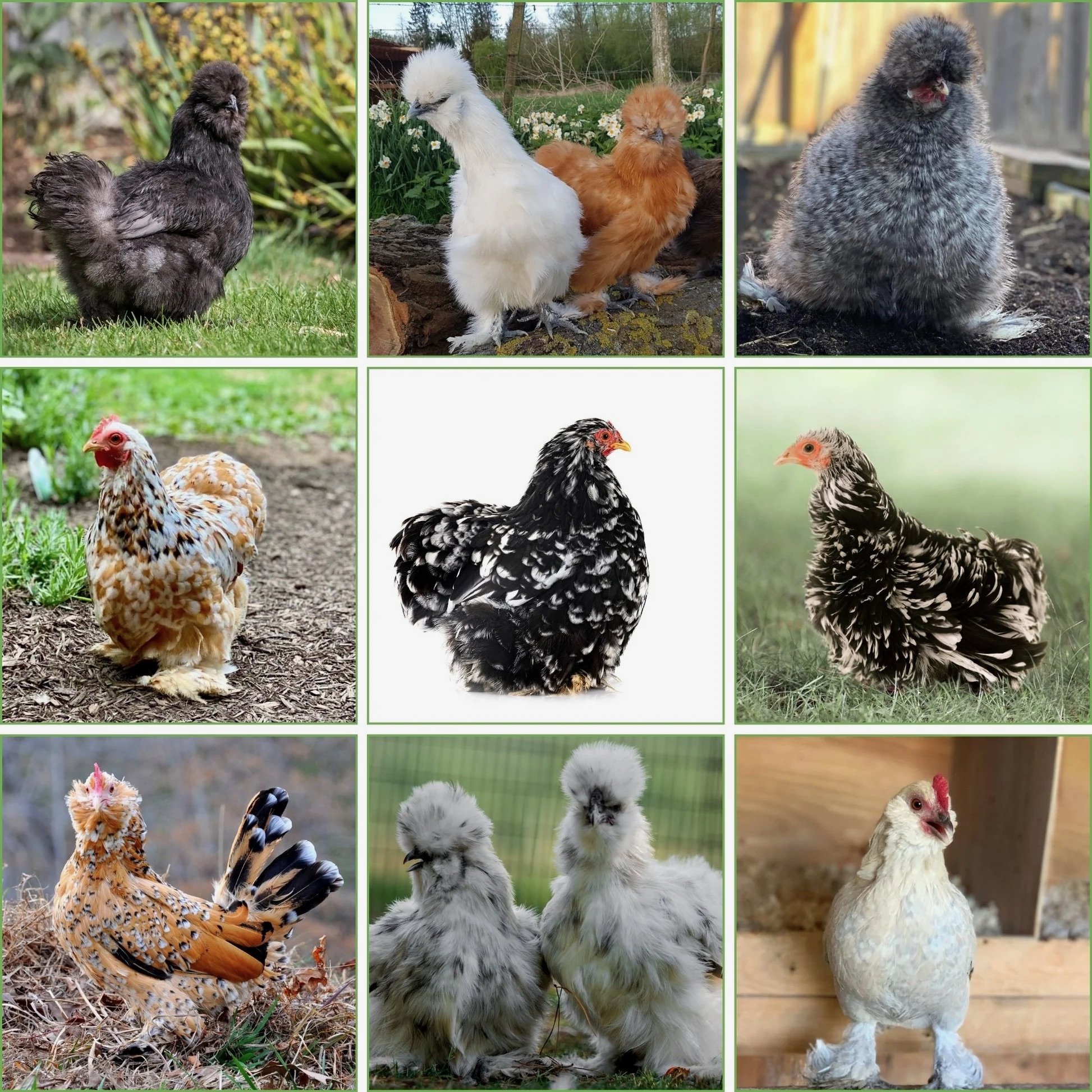
The flower garden of the poultry world, are miniature chickens, usually one-fourth to one-fifth the size of standard varieties. Because of their many different types and assortments of color patterns, raising bantams is rapidly becoming one of today's most popular hobbies. Little is known of the origin of bantams although they are believed to have come from the Orient.
Sultan Bantams
(straight run/unsexed)
Chicks • Pullets • Hens • Roosters
Egg Color: White
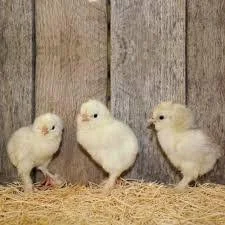
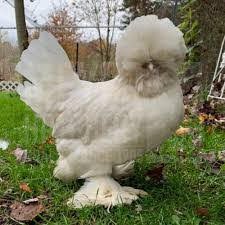
Sultan bantam chicks are light yellow cream colored. They have V-shaped combs, crests, beards, muffs, and feathered, five-toed feet and legs. All the adult plumage is white.
Black Frizzle Cochin Bantam
(straight run/unsexed)
Chicks • Pullets • Hens • Roosters
Egg Color: Brown
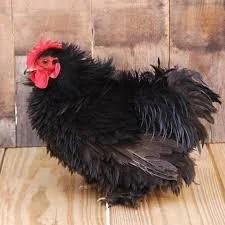
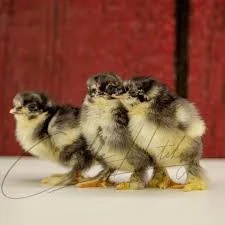
Frizzles are named after the nature of their feathers that curve outward and forward, giving the appearance of having been dried with a blow dryer. Most of the early frizzled fowls were found in southeastern Asia, the East Indies and Africa, with descriptions of frizzled fowls going back to the 1600's. Black Frizzle Cochin bantam chicks are primarily black with white on the wing tips, chest, abdomen and feet. They have single combs and feathered legs and feet. All the adult plumage is greenish black with each feather having a backward curl. Because the frizzle gene does not breed true, generally one fourth of your chicks will not show the frizzle characteristic. The frizzle characteristic does not show until the chicks begin to mature.
Because the frizzle gene does not breed true, generally one fourth of your chicks will not show the frizzle characteristic. The frizzle characteristic does not show until the chicks begin to mature.
**Our bantams are purebred and represent the breed and variety; however, we do not guarantee or represent that they are of show quality.**
White Crested Blue Polish Bantam
(straight run/unsexed)
Chicks • Pullets • Hens • Roosters
Egg Color: White
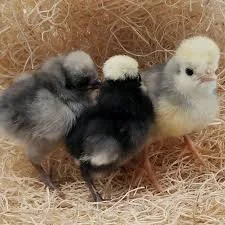
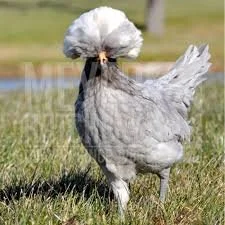
These White Crested Blue Polish chickens are a very special and rare breed of chicken with a huge bouffant crest of feathers and v-shaped comb. They are tame but their behavior can be a bit wacky since their crest limits their vision. When in a flock with more aggressive breeds, Polish will tend to be on the low end of the pecking order. Egg laying is varied in this breed - some lay well and some very poorly. In short, Polish are sweet, beautiful exhibition birds and can be good layers in the backyard flock, but they're not reliable.
Please be aware that the color blue does not hatch true in chickens. Blue is a diluting gene for black. So, 50% of white-crested blue Polish will hatch white-crested blue, and 25% will be white-crested black. The last 25% will be white-crested "splash," having received two diluting genes. Splash is a very light color, pale blue or white with "splashes" of black and darker blue in the feathers, especially in the wings and tail. Please keep this in mind when you order. Not all of your blues will actually be blue! Note also that our flocks produce a mix of bearded and non-bearded Polish.
Mille Fleur d’Uccle Bantam
(straight run/unsexed)
Chicks • Pullets • Hens • Roosters
Egg Color: Tinted
Bantam d'Uccles were developed in Belgium in the early 1900's when Booted Bantams were crossed with Belgian Bearded d'Anver Bantams. Mille Fleur d'Uccle bantam chicks are various shades of gray, black and brown. They have single combs, beards, muffs, and feathered legs and feet. Adult males have a light orange head with each feather being tipped with a V-shaped bar of black followed by a white spangle. The back, saddle and hackle feathers are light orange with a black stripe and tipped with a diamond shaped white spangle. The breast body, wing shoulders and wing fronts are golden bay marked with crescent shaped spangle of black and tipped with a V-shaped white spangle. The main tail is black tipped with white. Most of the plumage of adult females is golden buff with each feather being marked with a V-shaped bar of black and tipped with a white spangle.
Assorted Old English Bantams
(straight run/unsexed)
Chicks • Pullets • Hens • Roosters
Egg Color: Cream to lightly tinted
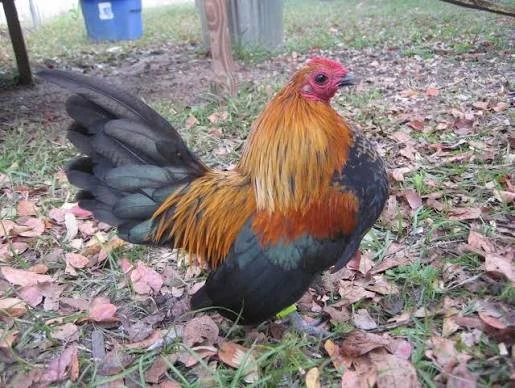
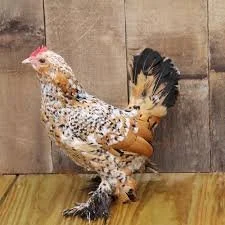
The Old English Game bantam is a delightful breed of chicken. It is a small, pugnacious, and charming little chicken that embodies the idea of pride and “chickenhood.” Their larger counterparts are the direct descendants of the jungle fowl, but the bantams are the end result of careful selective breeding of various backyard bantams. The first variety accepted to the American Standard of Perfection was Black Breasted Red (BBR), gaining recognition in 1925. Since their acceptance, they have become the most popular breed of exhibition chicken, easily reaching class sizes of over 300 birds in medium sized shows. Males are required to be dubbed in order to be shown, but unlike the Modern Game bantam part of the comb should be left, leaving a rounded nub. Old English have two distinct types, “American” and “English,” with the American type having a fanned tail and the English type having a “whip” tail. This breed is known for living a long and fruitful life; it is not uncommon for hens to reach 15 years of age.
Our bantams are purebred and represent the breed and variety; however, we do not guarantee or represent that they are of show quality.
Old English Silver Duckwing Bantam (straight run/unsexed)
Chicks • Pullets • Hens • Roosters
Egg Color: Tinted
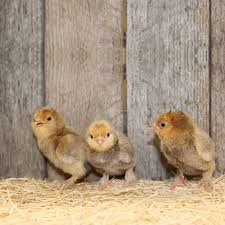
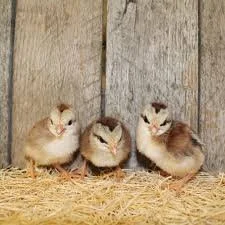
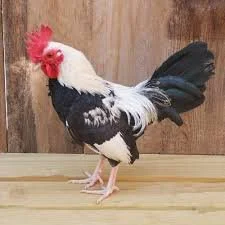
Old English bantams were developed in England many years ago presumably from the common crossbred bantams of the countryside. Silver Duckwing Old English bantam chicks have a dark brown band that reaches from the top of the head to the tail, bordered on each side by two narrow, light silver or white stripes, giving a chipmunk like effect. The face chest, abdomen and wing tips are silver or white. They have single combs and clean, white legs and feet. Adult males have white head, back, hackle and saddle plumage. The breast, neck, body, lower thigh and main tail are black. The wing coverts are blue-black forming a wing bar when folded. The adult female has a silvery gray head and salmon front of neck. The hackle is silvery gray with black striping. The back, tail coverts, wing shoulders, fronts, bows and coverts are silvery gray stippled with ashy gray.
Our bantams are purebred and represent the breed and variety; however, we do not guarantee or represent that they are of show quality.
Old English Black Breasted Red Bantam (straight run/unsexed)
Chicks • Pullets • Hens • Roosters
Egg Color: Tinted
Old English bantams were developed in England many years ago presumably from the common crossbred bantams of the countryside. Silver Duckwing Old English bantam chicks have a dark brown band that reaches from the top of the head to the tail, bordered on each side by two narrow, light silver or white stripes, giving a chipmunk like effect. The face chest, abdomen and wing tips are silver or white. They have single combs and clean, white legs and feet. Adult males have white head, back, hackle and saddle plumage. The breast, neck, body, lower thigh and main tail are black. The wing coverts are blue-black forming a wing bar when folded. The adult female has a silvery gray head and salmon front of neck. The hackle is silvery gray with black striping. The back, tail coverts, wing shoulders, fronts, bows and coverts are silvery gray stippled with ashy gray.
Our bantams are purebred and represent the breed and variety; however, we do not guarantee or represent that they are of show quality.
Old English Red Pyle Bantam
(straight run/unsexed)
Chicks • Pullets • Hens • Roosters
Egg Color: Tinted
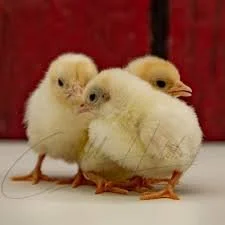
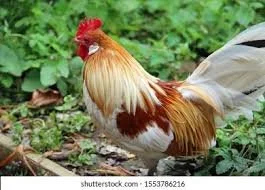
Old English bantams were developed in England many years ago presumably from the common crossbred bantams of the countryside. Red Pyle Old English bantam chicks are cream to light yellow with a gold face and two light gold streaks down the back. They have single combs and clean, white legs and feet. The breast and front of the neck of adult females is salmon, while most of the remainder of the body is white. Adult males have orange head, hackle and saddle plumage while the back is red. Most of the remaining plumage is white.
Our bantams are purebred and represent the breed and variety; however, we do not guarantee or represent that they are of show quality.
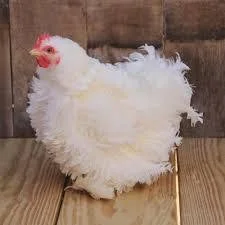
White Frizzle Cochin Bantam
(straight run/unsexed)
Chicks • Pullets • Hens • Roosters
Egg Color: Cream to light brown
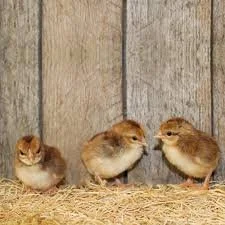
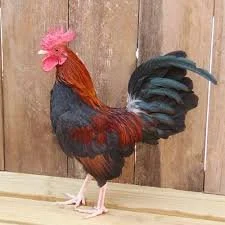
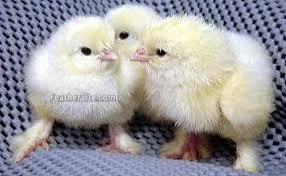
Frizzles are named after the nature of their feathers that curve outward and forward, giving the appearance of having been dried with a blow dryer. Most of the early frizzled fowls were found in southeastern Asia, the East Indies and Africa, with descriptions of frizzled fowls going back to the 1600's. Red Frizzle Cochin bantam chicks are primarily red with white on the wing tips, chest, abdomen and face. They have single combs and feathered legs and feet. All the adult plumage is red, with each of the feathers having backward curl. Because the frizzle gene does not breed true, generally one fourth of your chicks will not show the frizzle characteristic. The frizzle characteristic does not show until the chicks begin to mature.
Because the frizzle gene does not breed true, generally one fourth of your chicks will not show the frizzle characteristic. The frizzle characteristic does not show until the chicks begin to mature
**Our bantams are purebred and represent the breed and variety; however, we do not guarantee or represent that they are of show quality.**
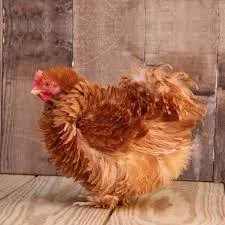
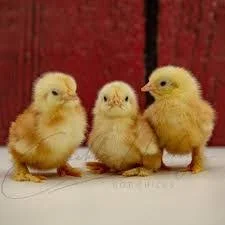
Red Frizzle Cochin Bantam
(straight run/unsexed)
Chicks • Pullets • Hens • Roosters
Egg Color: Brown
Frizzles are named after the nature of their feathers that curve outward and forward, giving the appearance of having been dried with a blow dryer. Most of the early frizzled fowls were found in southeastern Asia, the East Indies and Africa, with descriptions of frizzled fowls going back to the 1600's. Red Frizzle Cochin bantam chicks are primarily red with white on the wing tips, chest, abdomen and face. They have single combs and feathered legs and feet. All the adult plumage is red, with each of the feathers having backward curl. Because the frizzle gene does not breed true, generally one fourth of your chicks will not show the frizzle characteristic. The frizzle characteristic does not show until the chicks begin to mature.
Because the frizzle gene does not breed true, generally one fourth of your chicks will not show the frizzle characteristic. The frizzle characteristic does not show until the chicks begin to mature
**Our bantams are purebred and represent the breed and variety; however, we do not guarantee or represent that they are of show quality.**
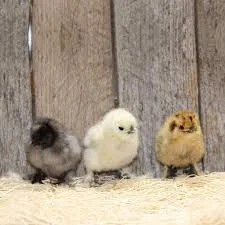
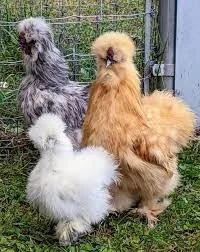
Assorted Silkies
(straight run/unsexed)
Chicks • Pullets • Hens • Roosters
Egg Color: Shades of brown
The Silkie, also known as the Silky or Chinese silk chicken, is a Chinese breed of chicken named for its atypically fluffy plumage, which is soft to the touch, like silk or fur. Other unusual qualities include black skin and bones, blue earlobes, and pentadactyly – most chickens have only four.
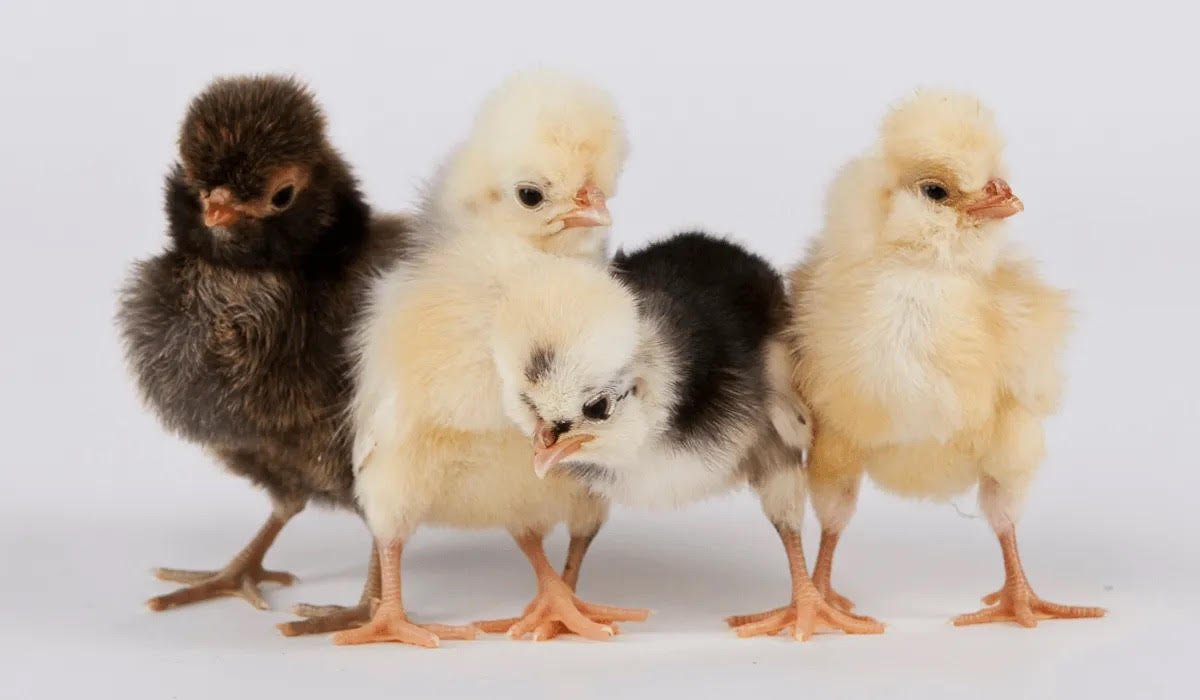
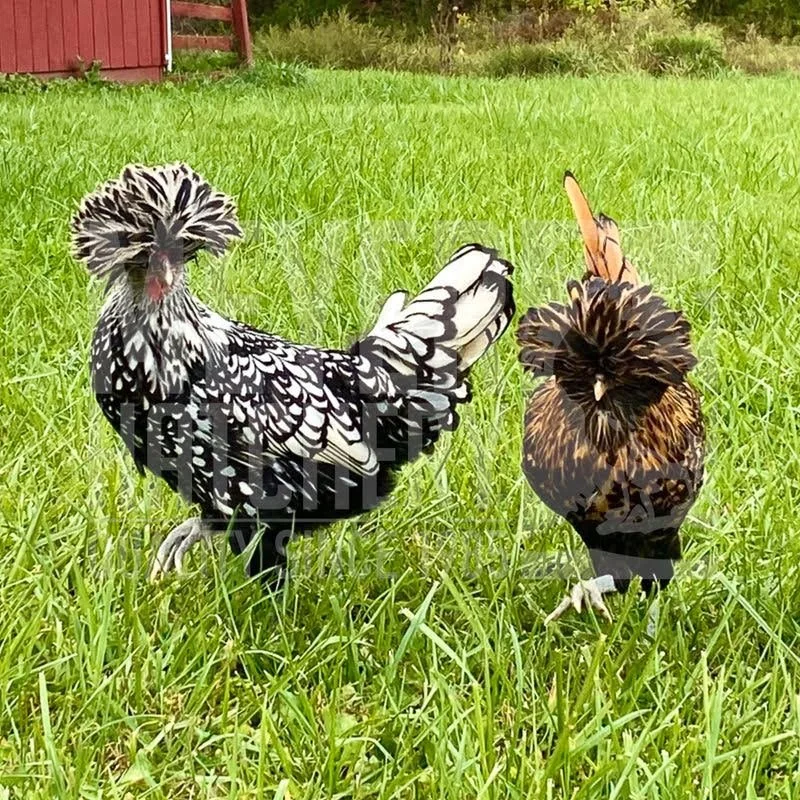
Assorted Cresteds
Chicks • Pullets • Hens • Roosters
Egg Color: Cream
Crested chicken breeds are distinctive for the ornamental crest of feathers on their heads and beloved for their quirky and endearing nature. Despite their unique appearance, these breeds are not only admired for their aesthetic appeal but also contribute to egg production, making them a delightful choice for those seeking both diversity and practicality in their backyard flock.
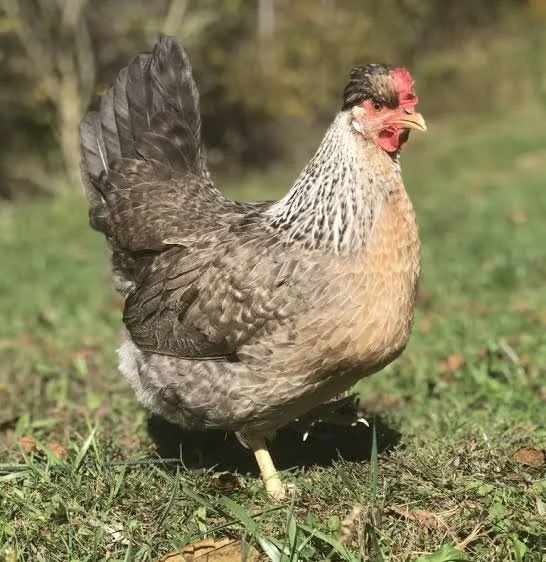
Welbar
Chicks • Pullets • Hens • Roosters
Egg Color: Dark brown, Deep terracotta brown
Welbars were created by Mr Humphreys of Eastwrey, Devon who thought of the idea in 1940. He contacted Professor Punnet (Breeder of the cream legbar) for advice. Following the legbar process, chicks from the initial welsummer x barred rock were hatched in 1941. Cockerels from this mating were then bred with welsummer hens to produce gold and silver welbars simultaneously. The breed was recognised by the Poultry Club of Great Britain in 1948 and still exist in the UK in small numbers. The only populations in the US were created using the classic autosexing recipe by RC Punnett. Like Legbars and Rhodebars, they are a utility breed, and good layers of dark brown eggs (from their Welsummer heritage). Hens strongly resemble Bielefelders, but lay darker eggs. Both sexes are somewhat heavier than Welsummers. Chicks are strongly autosexing, females look like Welsummer chicks, males are much lighter with very faded or no stripes and a white headspot.
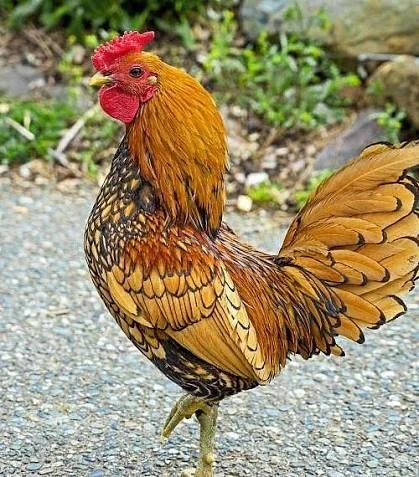
Sebright Bantam
Chicks • Pullets • Hens • Roosters
Egg Color: Creamy white
The Sebright bantam is one of a few breeds that are ‘true bantams’ (it has no larger equivalent). It was created in the early 19th Century by Sir John Sebright, the 7th Baronet of Besford, Worcestershire and possibly a few others by using ‘henny game’ but the details of the exact birds used are still unknown but to make the Gold Sebright, he possibly used a buff bantam Nankin hen with his ‘henny game’.
It is thought that it took him around 20 years of selection and inbreeding to achieve the patterns he wanted and to fix the type. To make the Silver Sebright it is thought he started by using a white Rosecomb cockerel. All feathers are required to have black lacing and there are a number of very good birds around (in the UK) but watch out for peppering in the centre of the feathers. Check underneath tail feathers since this is a common area for this to occur. The background colour of the Gold Sebright varies from country to country and even between different breeders’ strains. It is more important to achieve an even shade of gold, rather than an exact shade, but very dark or very light shades should be avoided. Lack of lacing on the feathers under the wattles is called bishop throating and is a common problem. Rose combs on male birds are often faulty. This should be square fronted, low and compact, not hollow fronted with a dent or side sprigs. Most birds on show do not have the dark purple comb, most these days having a pinker than ideal comb.
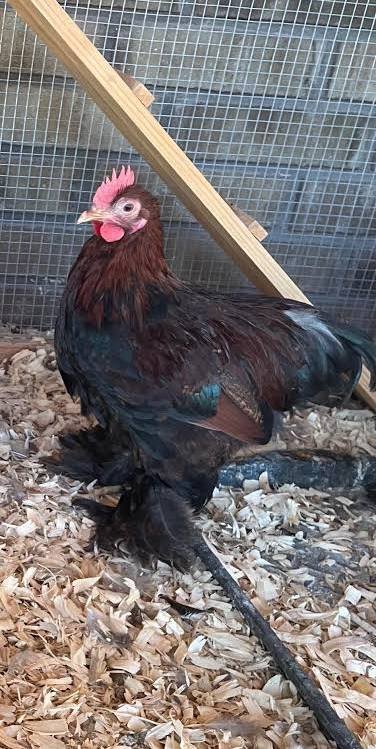
Partridge Cochin Bantam
(straight run/unsexed)
Chicks • Pullets • Hens • Roosters
Egg Color: Cream to light brown
Soldiers returning from China brought the first Cochin bantams to England in the 1860’s. They were known as “Pekin” bantams then and are still referred to as “Pekins” in many parts of Europe. Cochins are heavily feathered down the shanks and toes and appear to be much larger than they actually are. They are very gentle, excellent setters, require little space, and with their many color varieties are absolutely beautiful to look at. Cochins are the most popular of the feather legged bantams and one of our best setters.The male's saddle and hackle feathers are a rich, brilliant orange-red which when combined with the greenish black body makes for an extremely attractive bird. The female is feathered with a glossy mahogany brown feather penciled in black. A very popular Cochin.
**Our bantams are purebred and represent the breed and variety; however, we do not guarantee or represent that they are of show quality.**